
 Tiếng Việt
 简体中文
 Deutsch
 日本語
 한국어
 ไทย
 Русский
 Français


Chọn hệ Solar & lưu trữ cho công trình
Từ nhu cầu sử dụng điện đến cấu hình và dự toán sơ bộ. Không cần thông tin liên hệ.
Cụm tính toán tự động trước khảo sát
Kết quả hiện ở đây khi nhập đủ dữ liệu: diện tích pin, phần phụ trợ, mái cần dùng, tải module, công suất và cấu hình điện.
Phát triển và vận hành bởi QuangAnhcons. Kết quả sơ bộ cần khảo sát và xác nhận bằng văn bản trước khi đặt hàng hoặc thi công.
Solar 8.21.0 · QAC-UI-QUOTE 1.1.1
© 2026 CÔNG TY TNHH XÂY LẮP ĐIỆN QUANG ANH. Báo giá được lập bởi QuangAnhcons. Vui lòng giữ nguyên tên đơn vị lập và số tham chiếu khi lưu hoặc chia sẻ. Tên và tài liệu của bên thứ ba thuộc chủ sở hữu tương ứng.
The investment rate for a 1MWp solar power system in Vietnam ranges from 8.5 to 15 million VND/kWp depending on equipment quality, product brand, and system scale.
Economic benefits of solar energy
A 1MWp solar power system has an investment rate from 8.5 to 15 million VND/kWp. The difference is due to the quality of equipment, product brand, and system scale. With fairly good quality equipment, it can reach up to 15 million VND/kWp, but with large systems over 1 MWp, the scale advantage helps reduce the investment rate to about 8.5 million VND/kWp. This system has a payback period of 4-5 years thanks to reduced investment costs and attractive electricity selling prices in Vietnam, especially when electricity prices reach 3,000-4,300 VND/kWh during peak hours.
Solar energy plays an important role in providing clean and sustainable energy sources for Vietnam, offering many practical economic benefits. First, it helps reduce energy costs for households and businesses. In recent years, production and installation costs of solar energy systems have significantly decreased, providing favorable conditions for cost-saving, thus contributing to sustainable development.
Another undeniable benefit is the ability to create new jobs and boost the local economy. The installation, operation, and maintenance of solar energy equipment from reputable brands like ABB, Schneider can create many job opportunities, contributing to community economic development and enhancing national energy security.
Businesses also benefit from increased productivity and reduced production costs when using solar power. By significantly reducing operational costs, especially during peak hours, companies can optimize profits and quickly recover their investment, usually from a few years to more than ten years depending on the industry.
The solar energy system also helps to reduce pressure on the national power grid. With distributed electricity production from many solar power sources, the risk of grid overload is significantly reduced, ensuring higher stability and safety of the national power system.
Especially, using solar energy supports sustainable economic development and reduces CO2 emissions. As a renewable energy source, solar not only helps reduce dependence on fossil fuels but also limits exposure to greenhouse gas emissions, contributing to environmental quality enhancement. At the same time, solar power systems also help increase asset value and build a green brand for businesses, demonstrating a commitment to the environment and attracting trust from customers and partners.
Factors affecting the investment rate
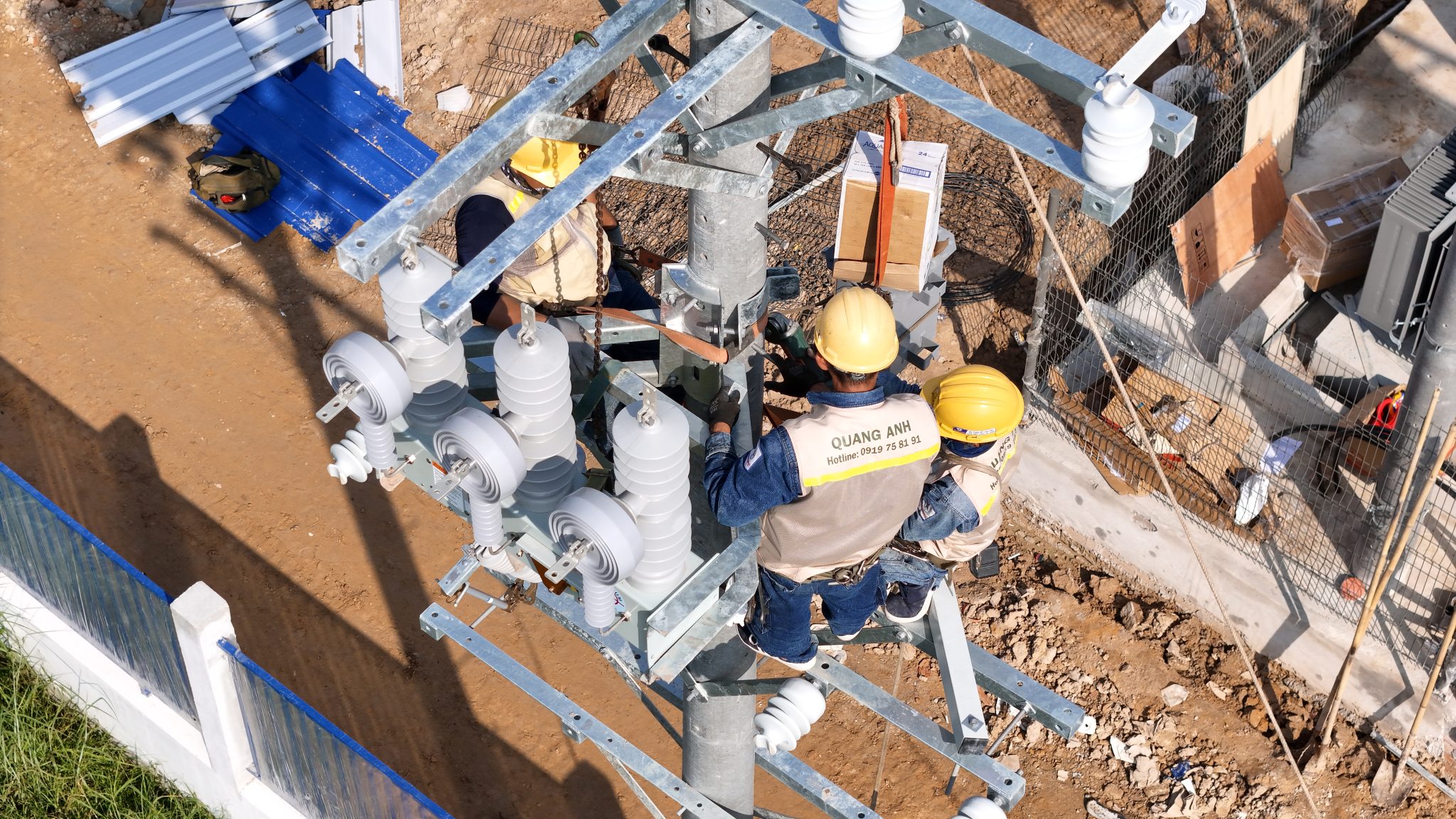
The main factors affecting the investment rate for solar power systems include the quality and brand of solar panels (accounting for about 60% of the total investment cost), roof structure for installation, land area used, and geographical location. Different regions will affect the electricity output, with 1 kWp capable of producing from 4-5 kWh/day, equivalent to 120-150 kWh/month. A 1 MWp system can produce about 180,000 kWh/month depending on the installation area.
Determining the investment rate for a solar power system is influenced by various factors, from economic to social, financial, and legal aspects. A prominent factor is the interest rate on loans, which directly affects investment decisions. When interest rates increase, borrowing becomes more difficult, resulting in higher borrowing costs, significantly impacting the investor’s decision.
Besides, business environment and legal policies also play a crucial role. A favorable business environment, quick administrative procedures will minimize time costs and informal expenses, thus enhancing investment appeal. Local legal regulations can either be barriers or promoters of investment activities, depending on whether they are suitable for the proposed investment rate.
Provincial Competitiveness Index (PCI) is equally important, with factors like market entry costs, land access, administrative procedures, information access, business support services, and labor training. These indicators contribute to determining the safety and effectiveness of investment implementation in specific areas.
For enterprises, internal factors such as expected profit margins, fixed assets, outstanding debt, and ownership type all significantly impact the ability to raise capital and investment decisions. Social factors must also be considered, as the influence from the community, friends, and investment consulting organizations can affect the investor’s final decision.
Finally, inflation index and financial market conditions are essential factors considered in any investment decision, as they directly affect interest rates and investment costs.
All these factors interact and influence each other to shape the investment decision for each solar power project.
Government support policies
The Vietnamese Government encourages the development of rooftop solar power systems with Decision No. 11/2017/QD-TTg and regulations from the Ministry of Industry and Trade such as Circular 16/2017/TT-BCT. Decree 135/2024/ND-CP has also been issued to promote solar power development, helping businesses and individuals access this renewable energy source more easily.
In the coming years, energy policies of Vietnam focus strongly on developing supporting industries, technology transfer, and digital transformation, aiming to promote sustainable development and optimize the Vietnamese electricity market. New decrees will bring significant changes and notable support for the economy:
- Developing supportive industries: Decree 205/2025/ND-CP, effective from September 1, 2025, aims to encourage organizations and individuals to participate in application research, innovation, and technology completion. This will help them benefit from funds like the National Technology Innovation Fund and the National Science and Technology Development Fund, contributing to the development of supporting industries and the Vietnamese electricity market.
- Agricultural production recovery: Decree 9/2025/ND-CP will be effective from the beginning of 2025 to support agricultural production activities affected by natural disasters. The Government will provide financial support for crops, livestock, and aquaculture, with specific support levels for aquaculture reaching up to 60 million VND/ha.
- Digital transformation and cybersecurity: Decree 179/2025/ND-CP effective from August 15, 2025, stipulates support of 5 million VND/month for participants in digital transformation and ensuring cyber information security. This not only fosters the development of cybersecurity management but also promotes sustainable technological development.
- Promoting public investment disbursement: In 2025, the Government plans to accelerate public investment disbursement with a minimum rate of 95% of the plan, aiming to stimulate economic growth and complete important infrastructure projects such as highways and airports.
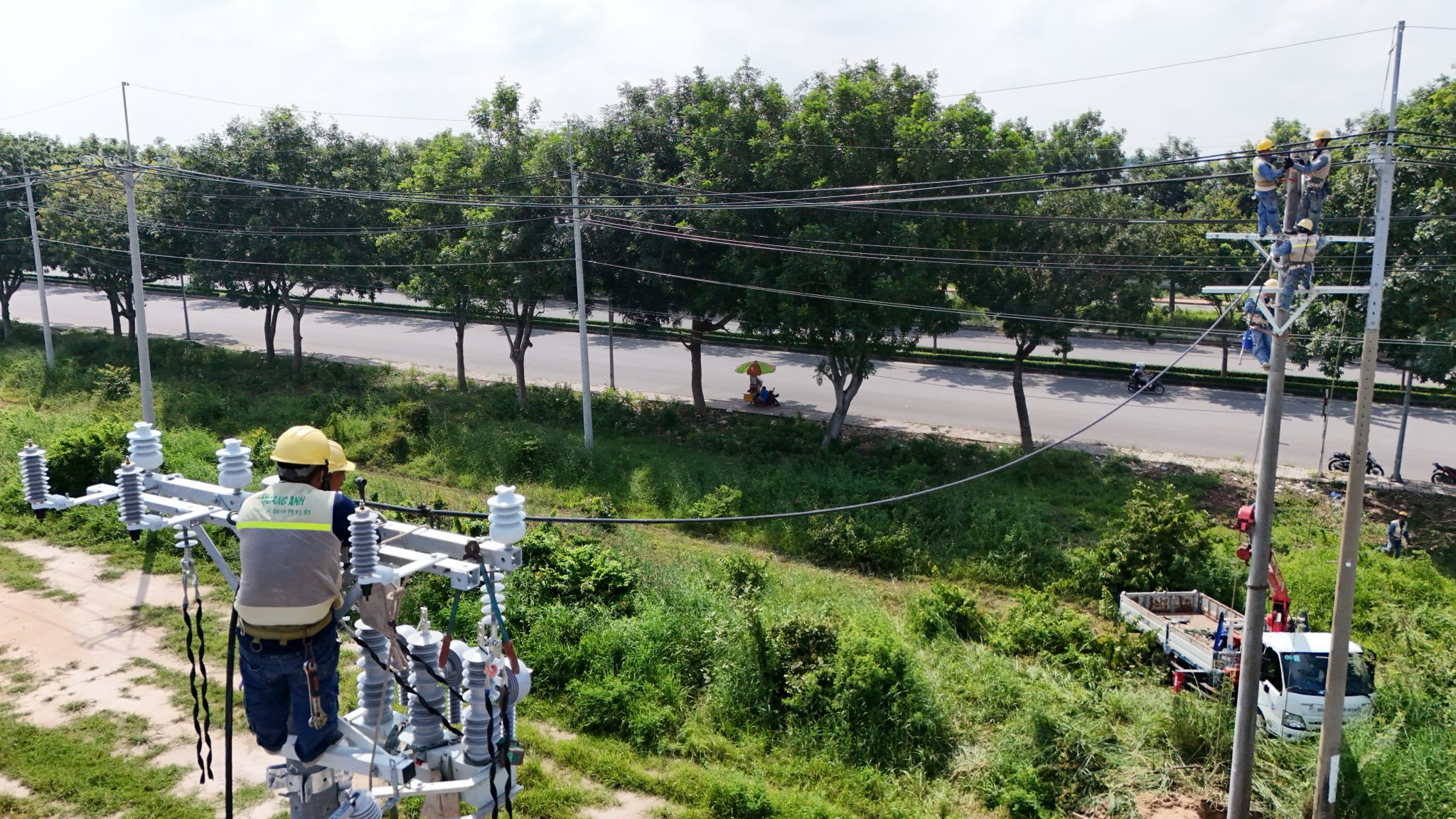
Investing in a 1MWp solar power system offers many economic and technical benefits. With an investment rate from 8.5 to 15 million VND/kWp and a quick payback time of 4-5 years, it is a feasible option for large businesses wanting to optimize costs and develop sustainably.
Contact QuangAnhcons via hotline +84 9 1975 8191 for detailed consultation on investing and installing a 1MWp solar power system.
QuangAnhcons provides consulting and installation services for solar power systems with high quality, optimizing costs for businesses, and complying with the Government’s sustainable development policies.
Substation budget estimate
Select the capacity, route lengths and package to view your indicative budget and electrical parameters.
Request a project quotation
Send your project details, BOQ or drawings to request a formal quotation. Fields marked * are required.
Quotation scope
Applies to one EVN-supplied substation with oil-immersed transformers at 22/0.4 kV (single-phase: 12.7/0.23 kV), with MV metering VTs/CTs supplied by EVN. The estimate includes the selected equipment, installation, earthing, transformer-to-main-breaker connections, design and connection documentation, and coordination of testing and utility acceptance.
Kiosk, integrated steel-pole and indoor substations include MV switchgear and the entered underground cable route. Other outdoor arrangements use the relevant protection configuration. The final diagram must meet the project connection requirements.
Excludes VAT, cables from the substation switchboard to the MSB/loads, live-line work, harmonic reactors, weak-ground treatment or special piling, land and special fire-protection provisions. Underground routes assume normal construction conditions and exclude road drilling and special reinstatement.
Prices are indicative investment budgets. A formal quotation follows site assessment and agreement on the configuration. Electrical selections are preliminary and require design verification before installation.
Capacity range and application conditions
The catalogue defines the enquiry range of this tool, not universal TCVN capacity limits. Single pole-mounted transformers: 15–100 kVA; three-unit banks: 3×15–3×100 kVA. Platform substations: 100–630 kVA. Steel-pole substations: 100–630 kVA; 750/800 kVA require design verification and local approval. Ground-mounted, kiosk and indoor configurations: 50–10,000 kVA. Not every configuration has a package price or the same structural design.
Reference: EVN Decision 1299/QD-EVN dated 3 November 2017, Volume 1, sections 3.3–3.4. Check the current requirements of the responsible utility before implementation. Kiosks must meet manufacturer ratings and testing requirements (IEC 62271-202); indoor and ground-mounted arrangements must meet project layout, ventilation, structural and fire-protection requirements. For multiple transformers, specify the quantity and capacity of each unit.
Developed by QuangAnhcons · © 2026 QuangAnhcons. Code licensed under GPL-2.0-or-later. Standards and manufacturer data belong to their respective owners.