
 Tiếng Việt
 简体中文
简体中文 Deutsch
 日本語
日本語 한국어
한국어 ไทย
ไทย Русский
 Français

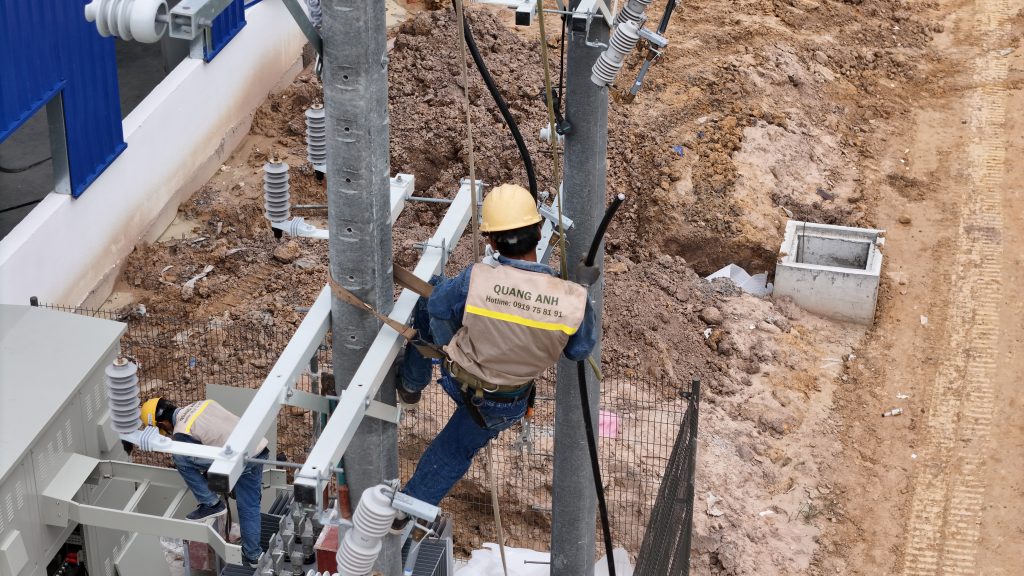
The cost of the industrial electrical system includes design, materials, and construction, affecting operational pricing in factories or industrial zones.
Basic Cost Components in Industrial Electrical Systems
Industrial electrical system costs mainly consist of three groups: design, materials, and construction. Design costs depend on the complexity and scope of the project, usually involving creating circuit diagrams and equipment layout. For materials, the prices of electrical cables and accompanying items such as electrical cabinets, switches, and lighting fixtures vary with quality and purchase times. Construction costs are for labor and detailed installation stages, such as wiring and lighting system setups. Systems can be constructed with reference prices ranging from 60,000 to 200,000 VND/m2, depending on methods like adhesive wiring, pulling wires, and combining with water supply systems.
In industrial electrical systems, correctly identifying the basic cost components is crucial for enhancing investment efficiency. The basic cost components in an industrial electrical system can be divided into three main parts: material and equipment costs, labor and construction costs, and long-term operational and maintenance costs.
Material and Equipment Costs
One of the largest cost categories is materials and equipment. The main power supply system includes medium-voltage cabinets, transformers, and main switchboard cabinets like MSB, all playing key roles. Additionally, auxiliary power distribution systems cannot be ignored, with distribution cabinets serving various industrial equipment. Lighting systems and auxiliary systems such as LAN networks, telephones, and security systems are also essential parts of the electrical system.
Labor and Construction Costs
Electrical construction costs require significant labor costs and include several stages like installing electrical conduit pipes, cable trays, and both power cable connections. The installation and repair of individual electrical equipment are also indispensable parts. Construction labor costs can be calculated by square meter or by the number of specific devices, e.g., installing electrical equipment may be approximately 100,000 VND/unit.
Operational and Maintenance Costs
Industrial electrical maintenance is closely related to the cost of consumable materials and salary expenses for the operating team. External procurement services like repair and maintenance also contribute significantly to the total cost. Additionally, working capital costs and ancillary services during operation must be fully considered to ensure the system’s safe and stable operation.
Optimizing the basic cost components in an industrial electrical system will help businesses save costs, enhance efficiency, and maintain stable operations over a long period.
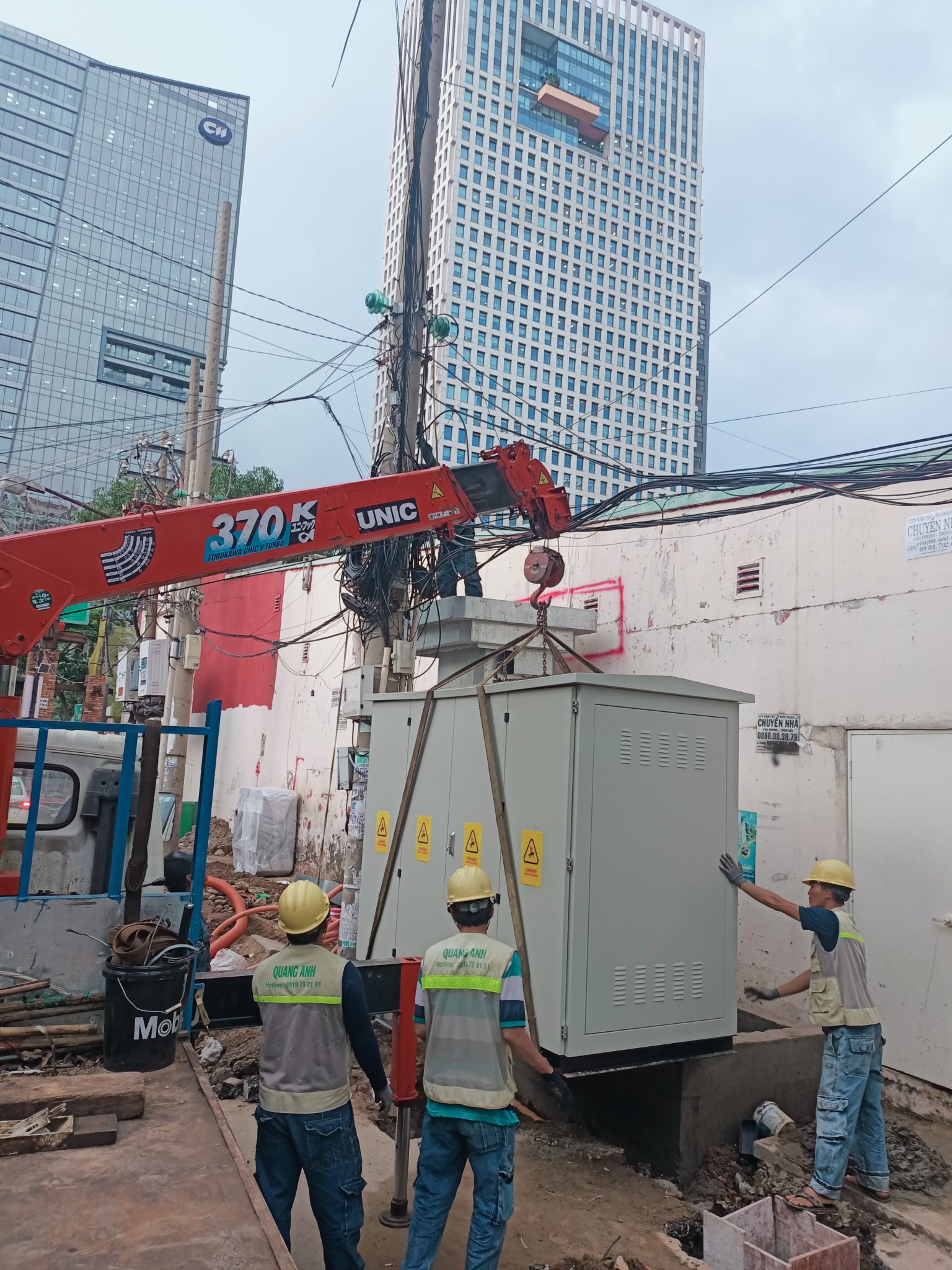
Costs of Production and Business Electricity
Electricity Costs for Production and Business
Industrial electricity prices are determined by voltage levels and transformer station capacity, ranging from 1,728 to 1,865 VND/kWh for different voltage levels. This is a necessary operating cost of the industrial electrical system with significant impacts on total monthly costs. For example, a transformer station under 50 MVA has electricity costs of approximately 1,728 VND/kWh. For systems using voltages from 6 kV to below 22 kV, costs can be up to 1,865 VND/kWh.
Electricity costs are a critical factor in business production in Vietnam, especially as electricity prices continually increase due to changes from the Vietnam Electricity Group (EVN). By May 2025, electricity prices had risen significantly by 4.8% compared to earlier, adding financial burdens to businesses.
According to data from the Ministry of Industry and Trade and reports from EVN, electricity production and business costs, including generation, transmission, and distribution along with sectoral support costs, have steadily increased:
- In 2021, costs reached 419,031.80 billion VND, with production costs at 1,859.90 VND/kWh.
- In 2022, total costs rose to 493,265.30 billion VND, equivalent to 2,032.26 VND/kWh, up by 9.27% from the previous year.
- By 2023, costs continued to rise to 528,604.24 billion VND, with production costs reaching 2,088.90 VND/kWh, an increase of 2.79% from 2022.
This situation demonstrates increasing pressure on electricity costs for businesses, especially amid challenging export markets and intense competition.
Current calculations for electricity charges in production and business apply an average retail electricity tariff of approximately 1,864.44 VND/kWh. The lowest production electricity price accounts for about 51% of the average retail price, while the highest price can reach about 169%, or about 3,114 VND/kWh, depending on usage levels and electricity consumption tariffs.
Increased electricity prices significantly impact businesses, causing challenges not only with entry production costs but also in adjusting product selling prices to balance rising costs.
Electricity costs for business production in Vietnam are trending upwards, with production cost pricing advancing from 1,860 VND/kWh in 2021 to over 2,080 VND/kWh by 2023. Business electricity tariffs are highly diverse depending on consumption and applied pricing levels, creating numerous challenges for domestic production enterprises.
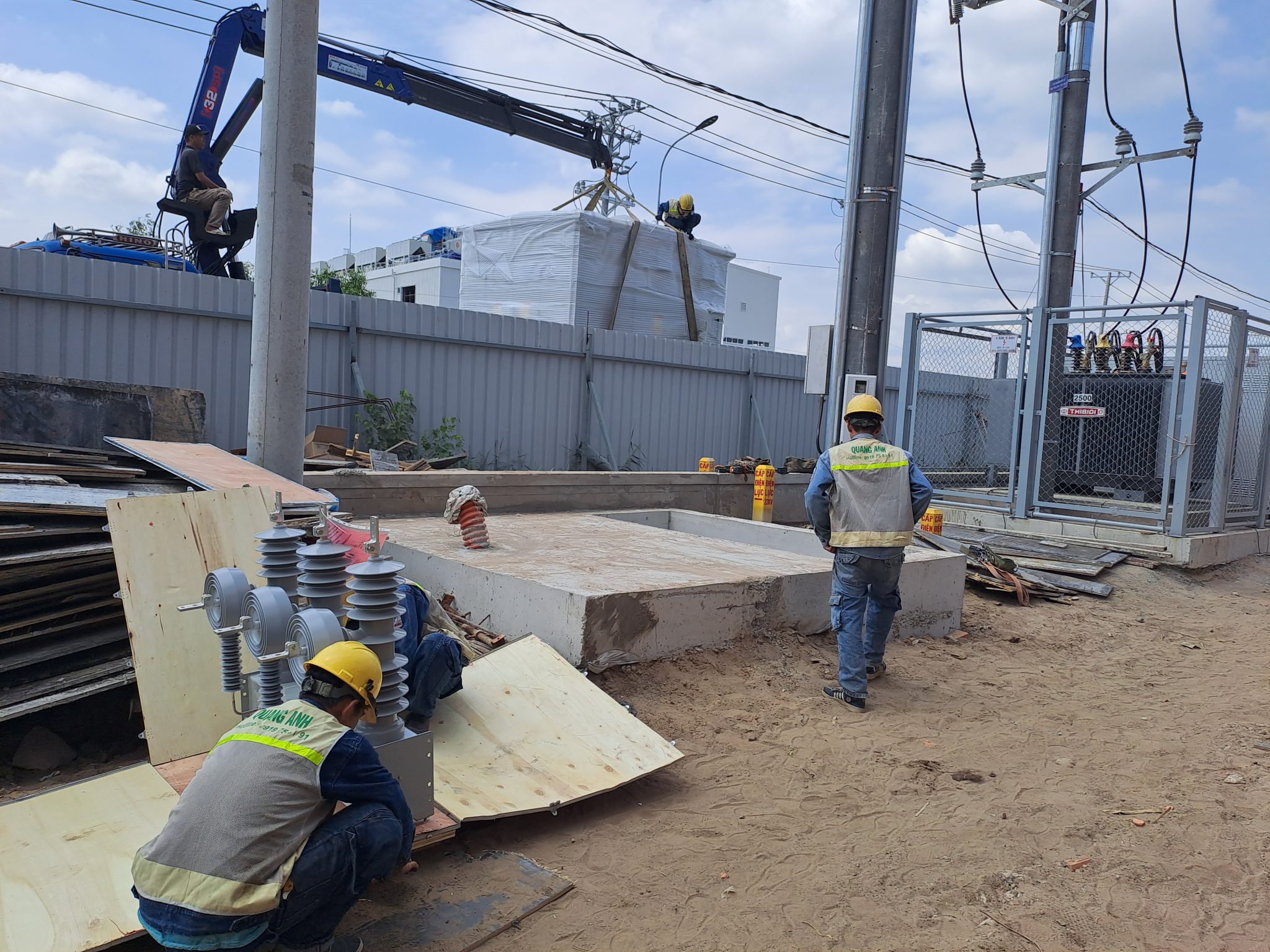
Solar Power Systems in Industry
Integrating solar power systems is becoming a cost-saving trend. Solar energy systems with capacities from 3kWp to 10kWp have installation costs from 75 to 185 million VND, while systems above 10kWp average around 9-10 million VND per kWp. Using solar power in industrial workshops not only helps reduce operational electricity costs but also increases long-term sustainability and efficiency.
Solar power systems in industry are emerging as an important renewable energy solution, playing a core role in reducing the load on the national grid and optimizing operating costs for factories and industrial zones in Vietnam.
Potential and Development Goals
Renewable energy, especially solar power, is being actively promoted to meet the 2030 goal with projected capacities from 46,459 MW to 73,416 MW, accounting for 25.3% to 31.1% of total power source capacity. By 2050, this capacity is expected to reach nearly 295,000 MW, accounting for over 35%. Vietnam has great potential for solar energy with radiation levels reaching about 2,056 kW/m²/year, ideal for developing industrial solar power projects, especially in central and Mekong Delta regions.
Components for Industrial Solar Power Systems
A standard industrial photovoltaic system consists of the following main components:
- Photovoltaic Panels (PV Panels): Convert sunlight into direct current (DC).
- Inverters: Convert DC into alternating current (AC) suitable for industrial machinery operation.
- Electrical Cabinets and Controllers: Manage, control, and protect the entire electrical system.
- Smart Monitoring Systems: Offer remote monitoring of electrical output and equipment status.
- Battery Energy Storage Systems (BESS): Store excess energy for use when needed, enhancing stability and economy.
Applications and Benefits in Industry
Industrial solar power provides numerous benefits for green industrial workshops. Clean power is directly supplied to machinery systems, reducing reliance on the national grid and consequently, lowering electricity costs for enterprises. Additionally, when excess power production occurs, the surplus can be stored in energy storage systems or sold back to the grid, thus creating extra revenue.
Challenges and Obstacles
Despite great potential, deploying solar power in industry encounters issues with policies, legislation, and techniques. The government needs to introduce stronger support policies regarding investment, planning, and purchase price frameworks, simplify administrative procedures, and improve financial support mechanisms. Technical challenges such as integrating solar power systems with existing grids also need to be addressed.
Solar Power Manufacturing Industry in Vietnam
Vietnam is transforming in the solar panel manufacturing industry with large-scale factories, such as in Ho Chi Minh City. However, this industry still needs to improve production stages like refining silica from sand and fabricating complete PV panels to optimize value chains and reduce import dependency.
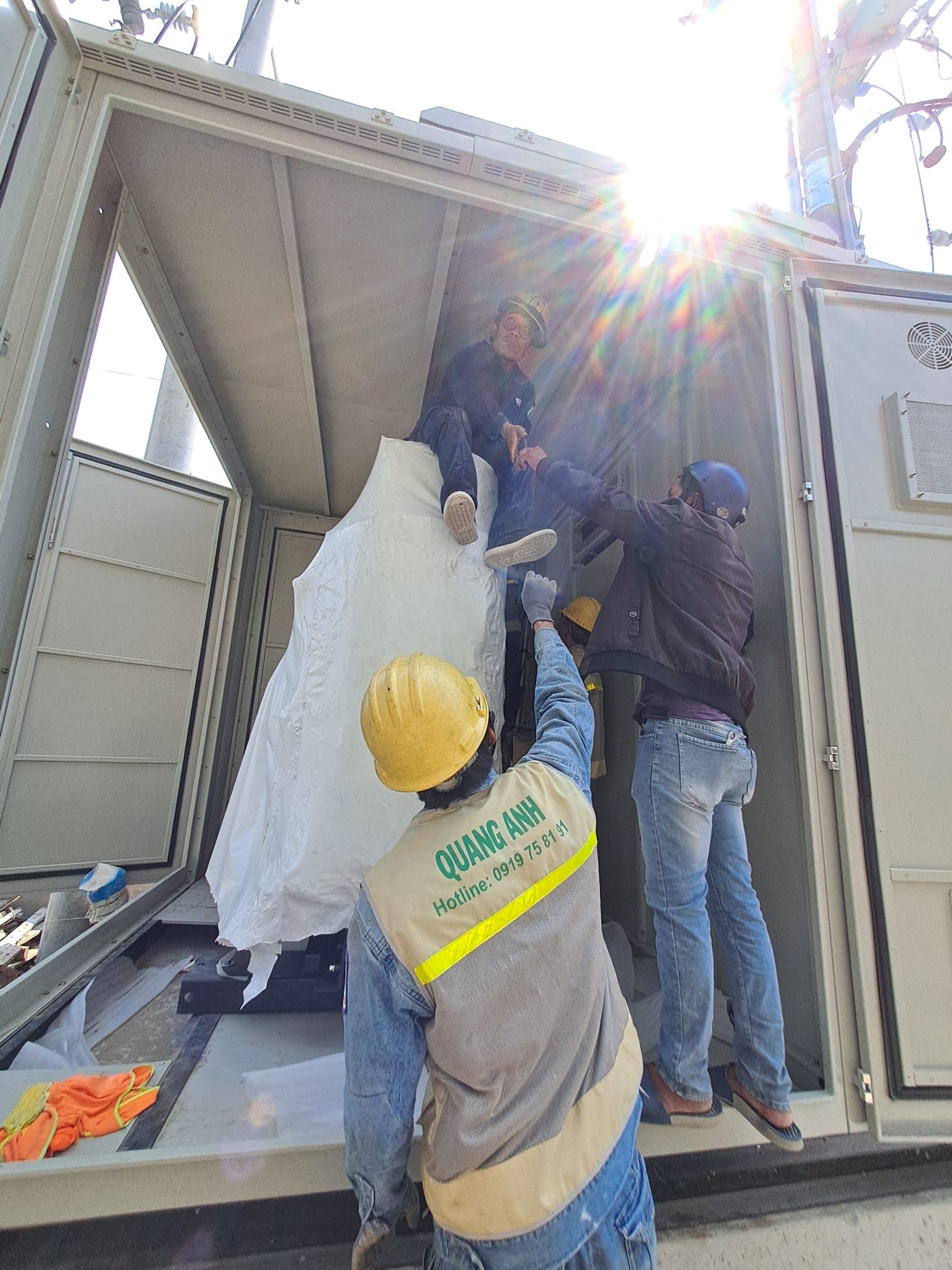
Understanding industrial electrical system costs is necessary to optimize investment and operation. Selecting appropriate designs, materials, and construction methods not only reduces initial costs but also saves long-term operational costs. Additionally, integrating solar power systems opens up sustainable and cost-saving solutions for enterprises.
Interested in installing and optimizing industrial electrical systems? Contact QuangAnhcons now via Hotline: +84 9 1975 8191 for the most suitable solutions.
QuangAnhcons provides industrial electrical system design and installation services, including solar energy solutions, to optimize costs and enhance energy efficiency for enterprises.
Tính nhanh giá trạm biến áp
Chọn công suất và chiều dài tuyến để xem giá tham khảo cùng thông số điện.
Gửi yêu cầu báo giá theo thiết kế
Gửi thông tin công trình, BOQ hoặc bản vẽ để nhận báo giá chính thức. Các trường có * là bắt buộc.
Phạm vi báo giá
Áp dụng cho một trạm mua điện EVN, máy dầu 22/0,4 kV (máy một pha: 12,7/0,23 kV), TU/TI trung thế do EVN cấp. Giá gồm thiết bị theo cấu hình, lắp đặt, tiếp địa, liên kết máy–CB tổng, hồ sơ thiết kế–đấu nối và phối hợp thí nghiệm, nghiệm thu điện lực.
Kios, trụ thép hợp bộ và trạm trong nhà có tủ trung thế cùng đoạn cáp ngầm theo thông tin đã nhập. Các kiểu ngoài trời dùng phương án bảo vệ tương ứng; sơ đồ cuối cùng cần phù hợp yêu cầu đấu nối tại công trình.
Chưa gồm VAT, cáp từ tủ trạm đến MSB/phụ tải, hotline, cuộn kháng lọc hài, nền yếu/cọc đặc biệt, đất và PCCC đặc thù. Tuyến ngầm tính theo điều kiện thi công thông thường, chưa gồm khoan qua đường hoặc hoàn trả đặc biệt.
Giá dùng để tham khảo đầu tư. Báo giá chính thức được xác nhận sau khảo sát và thống nhất cấu hình. Thông số điện là lựa chọn sơ bộ, cần kiểm tra theo thiết kế trước khi thi công.
Dải công suất và điều kiện áp dụng
Danh mục là phạm vi tiếp nhận yêu cầu của công cụ, không phải giới hạn công suất chung của TCVN. Trạm treo một máy: 15–100 kVA; bộ ba máy: 3×15–3×100 kVA. Giàn: 100–630 kVA. Trụ thép: 100–630 kVA; 750/800 kVA cần xác nhận thiết kế và chấp thuận tại địa phương. Nền/kios/phòng: danh mục 50–10.000 kVA, không có nghĩa mọi cấu hình đều có giá trọn gói hoặc cùng kết cấu.
Tham khảo QĐ 1299/QĐ-EVN ngày 03/11/2017, Tập 1, mục 3.3–3.4; kiểm tra văn bản hiện hành của điện lực quản lý trước khi triển khai. Kios phải phù hợp định mức/thử nghiệm của nhà chế tạo (IEC 62271-202); phòng/nền phải đáp ứng bố trí, thông gió, kết cấu và PCCC của dự án. Công suất trạm nhiều máy phải tách số máy và công suất mỗi máy.
Công cụ do QuangAnhcons phát triển · © 2026 QuangAnhcons. Mã nguồn theo GPL-2.0-or-later; tiêu chuẩn và dữ liệu hãng thuộc chủ sở hữu tương ứng.