
 Tiếng Việt
 简体中文
简体中文 Deutsch
 日本語
日本語 한국어
한국어 ไทย
ไทย Русский
 Français

https://www.youtube.com/watch?v=5eBSEykywKw
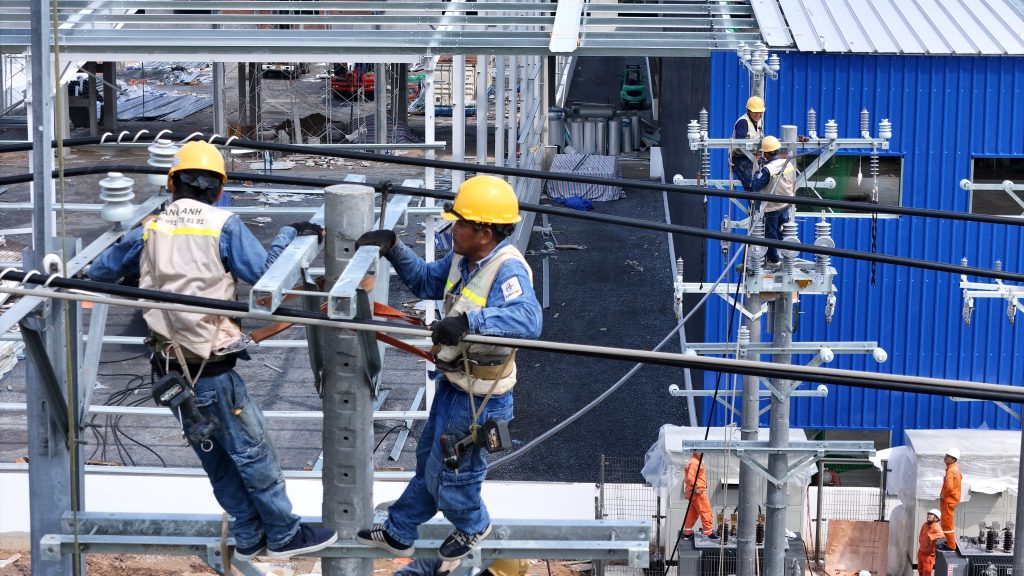
Construction of industrial substations involves building and installing a high-capacity transformer system to provide stable power for factories, industrial zones, or large projects. This process requires precise techniques, high safety, and adherence to procedures to ensure effective operation and durability of the substation.
Industrial Substation Construction Process
Industrial substation construction is a complex procedure including site surveys, foundation construction, grounding system installation, and connection testing. Firstly, site surveys are conducted to determine the optimal location for the electrical system. Then, the station foundation is poured with concrete to create a solid base. Support equipment such as switches and operation platforms are erected to prepare for moving the transformer in place. Subsequently, medium voltage cables are pulled and installed to connect the equipment. Finally, connections and connection tests are carried out to ensure the system runs effectively before acceptance testing and handover.
-
Survey and Planning
The industrial substation construction process begins with substation surveying. Identifying the optimal position is crucial, involving terrain checks and safe distances to nearby structures. Groundwork landmarks and underground cable routes need to be precisely measured and approved by investors and supervisory consultants. Finally, the site must be organized effectively, preparing adequate surface area, power, water, and manpower matching the work volume.
-
Excavation and Foundation Construction
Proceed with foundation station construction and underground cable trenching following the design drawings strictly. The installation of the grounding system must ensure grounding resistance meets safety standards – typically not exceeding 4Ω. Concrete for foundation must be poured with pre-fabricated steel reinforcement, requiring a waiting period of 72 hours before equipment installation.
-
Mechanical and Electrical Installation
Installation includes erecting poles, crossarms, and insulators, ensuring vertical alignment and safe electrical clearance. Switches, distribution cabinets, and operation platforms are installed to guarantee good electrical contact, facilitating operation. Pulling medium voltage cables is done by spreading a thick bed of sand, then placing cables and covering with more sand and protective tiles. A red warning tape is placed along the route to reinforce safety.
-
Transformer Installation
Transformers are transported to the location using specialized vehicles and positioned accurately onto the support base using a crane. Before operation, several technical checks are required, including evaluating the insulating resistance of the coils, voltage transformation ratios, and checking transformer oil if present.
-
Connection and Testing
Proceed with transformer connection testing by connecting medium/low voltage cables to the transformer, distribution system, and RMU cabinets. Necessary acceptance tests such as grounding resistance measurement, partial discharge ultrasonic testing, and no-load operation check must be thoroughly conducted. Lastly, a load trial runs for 24 to 72 hours to ensure the best operational efficiency before handover to the investor.
-
Safety and Compliance
Labor safety must always be prioritized, using insulated shoes and voltage-resistant gloves during connections. Danger warning signs should be installed at visible locations. Strict compliance with QCVN 18:2021/BXD standards for substations and electrical systems in buildings is necessary.
Ultimately, lightning protection is also an indispensable factor in the industrial substation construction process. Detailed handover documentation with technical specifications and acceptance records for each item needs to be prepared for future inspection and reference.
Preparatory Work Before Substation Construction
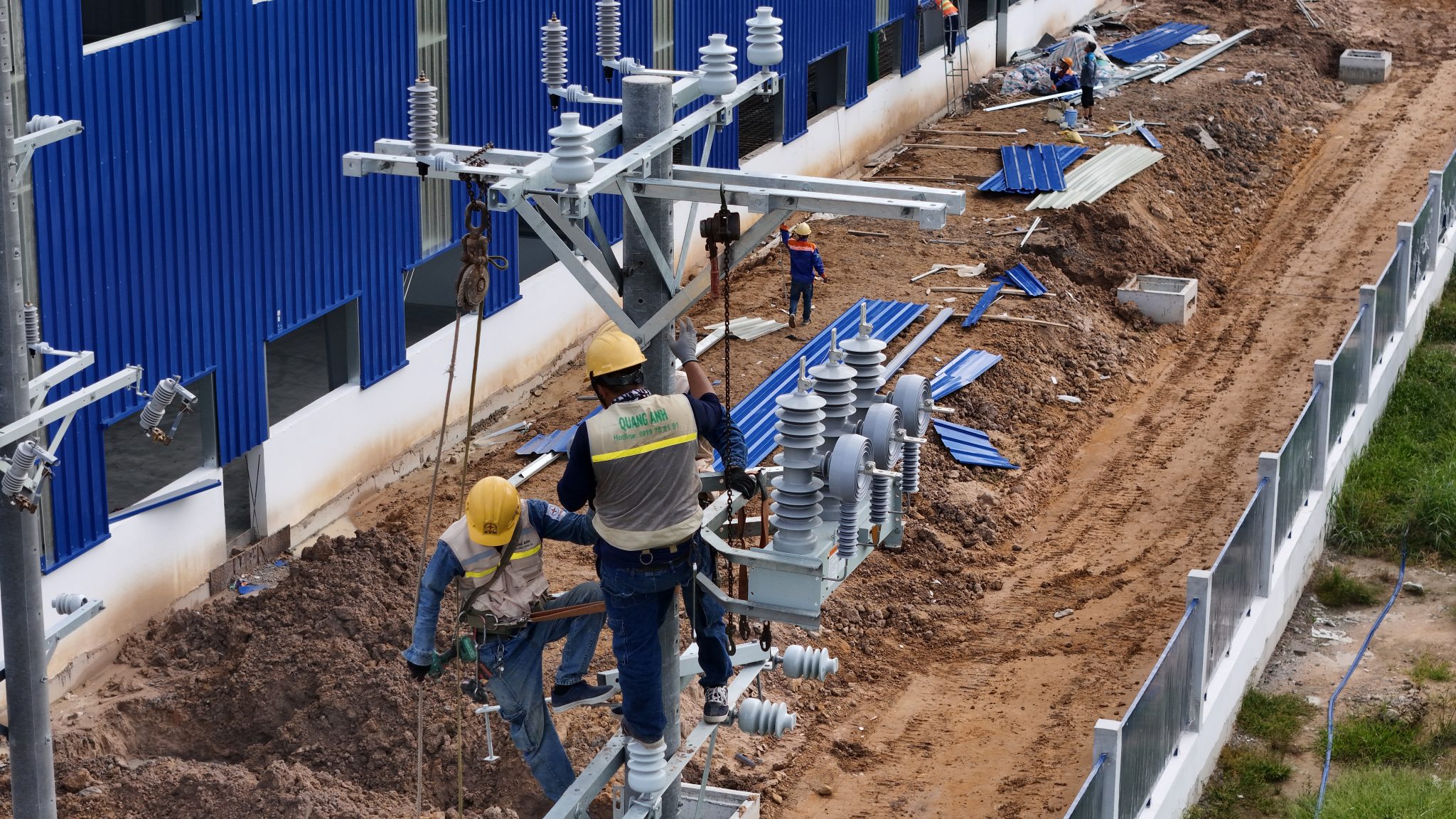
Before constructing an industrial substation, preparing the site and materials is crucial. The site must be cleared and released, while equipment such as transformers and electrical cables need to be properly stored. Acceptance of materials and equipment helps ensure quality for the construction process. Additionally, checking electrical safety by measuring phase order and low voltage is necessary to avoid connection errors.
Preparatory work before substation construction is critical to the project’s success. To ensure safety and accuracy, the following steps must be taken:
- Check and Complete Existing Preparatory Infrastructure:
- Ensure foundations and transformer bases have been concreted and foundation bolts are correctly positioned, along with completed cable trenches. Flatness and elevation parameters of the support bases must also be accurate.
- Organize the Site, Prepare Surface and Resources:
- The site must be cleaned, wide enough, and ensure power and water sources are ready for construction. Coordinate construction teams and adequately prepare construction equipment.
- Prepare Detailed Construction Plans and Coordinate with Stakeholders:
- Plan each construction step, clearly assign tasks. Ensure good contact and coordination with supervisory staff, technical units, and suppliers for synchronization in construction.
- Check, Receive Materials and Equipment:
- Receive and inspect transformers, cables, switching equipment, ensuring correct specifications and complete certification.
- Prepare Lifting and Transportation Equipment:
- Plan for transportation and arrange support equipment such as cranes, hoists to accurately and safely install transformers.
- Check Other Support Systems Before Construction:
- Ensure that grounding systems and medium and low voltage cables are ready and precise. Check all protective and insulation systems to ensure electrical construction safety.
Preparatory work, checking industrial electrical materials, and making detailed construction electrical plans are essential to ensure safety and efficiency for industrial substation installation.
Techniques and Safety in substation construction
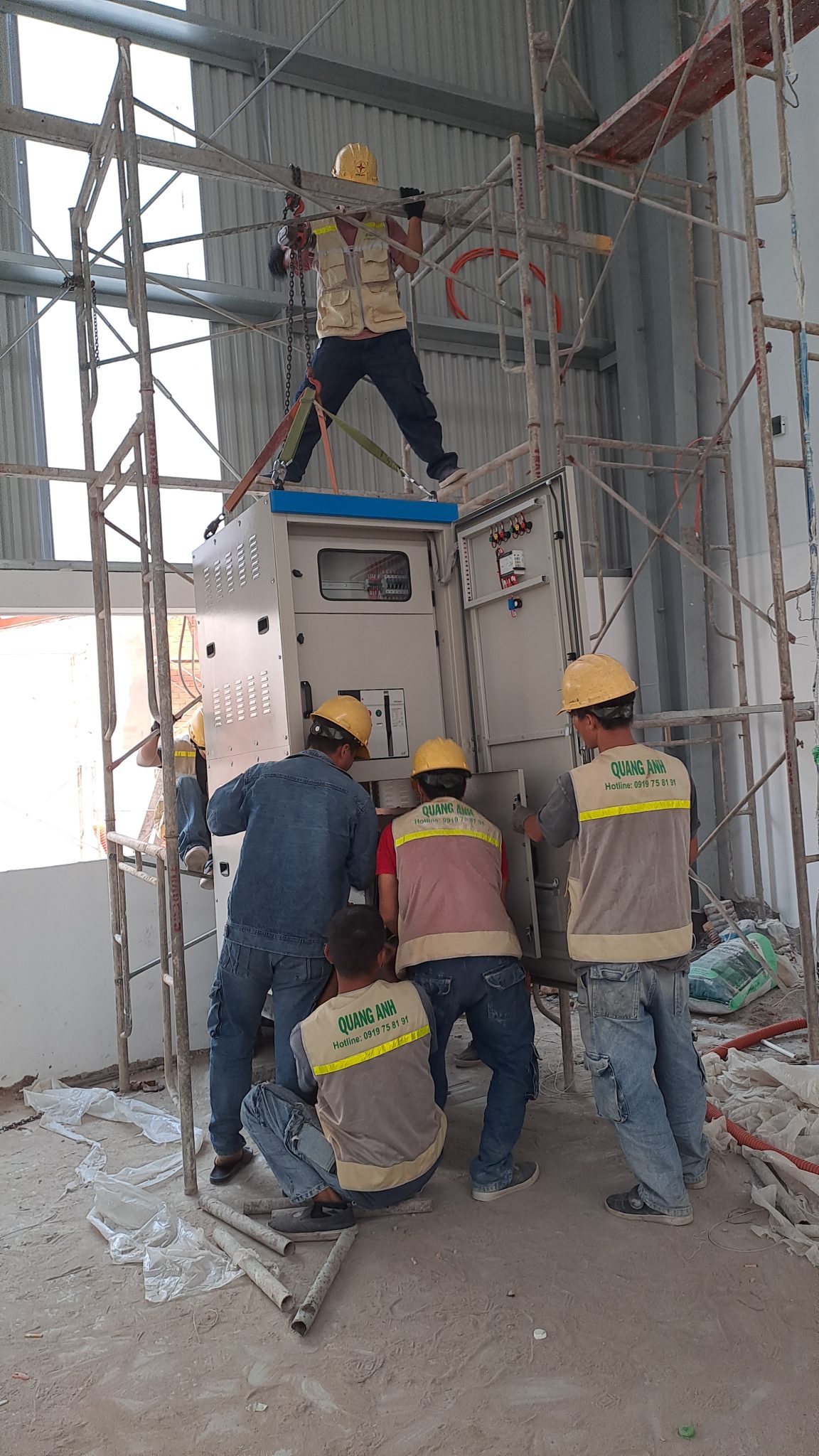
Technical safety is the top priority when constructing industrial substations. The construction process must be carried out by experienced technical staff, with continuous supervisory acceptance. The grounding system must comply with standards to prevent electrical contact phenomena and protect equipment from surge lightning. All installation and connection steps must be accurate according to the design schema and thoroughly checked before electrification.
Technical Construction
1. Survey and Planning
- Begin the process by conducting a field survey at the construction site to ensure suitable and safe substation construction.
- Develop a detailed plan based on the survey results, including positioning foundations and medium voltage cable routes.
2. Foundation Construction and Structure
- Excavate foundations and pour concrete for solid base construction of substations.
- Install supporting pillars for transformers along with systems like grounding and switches.
3. Transformer Installation
- Use cranes to lift and position transformers accurately onto the foundation bolt system.
- Adjust vertical alignment and fasten bolts to the frame for stable placement of the transformer.
4. Completion and Inspection
- Pull medium voltage cables and connect substation systems.
- Conduct experiments, calibration, internal acceptance, and test energization before handover.
Safety in Construction
1. Supervising Engineer Presence
- The supervising engineer is always present to oversee the construction process, ensuring the correct technique and safety compliance.
2. Adherence to Procedures
- Workers must strictly adhere to the designated safety technical procedures.
3. Materials and Equipment
- Use standard-compliant materials, avoiding broken bricks, stones, or wood.
- Ensure lifting equipment has load capacities suitable for technical requirements.
4. Personal Protection Equipment
- Provide full protective equipment for workers to minimize risk of accidents during work.
Notes and Requirements
- Position Marking: Accurately determine the position of foundations and medium voltage cable routes to avoid construction errors.
- Time: Wait at least 72 hours after pouring concrete before transformer installation to ensure concrete hardness.
- Supervision: Continuously oversee and address any errors occurring during construction.
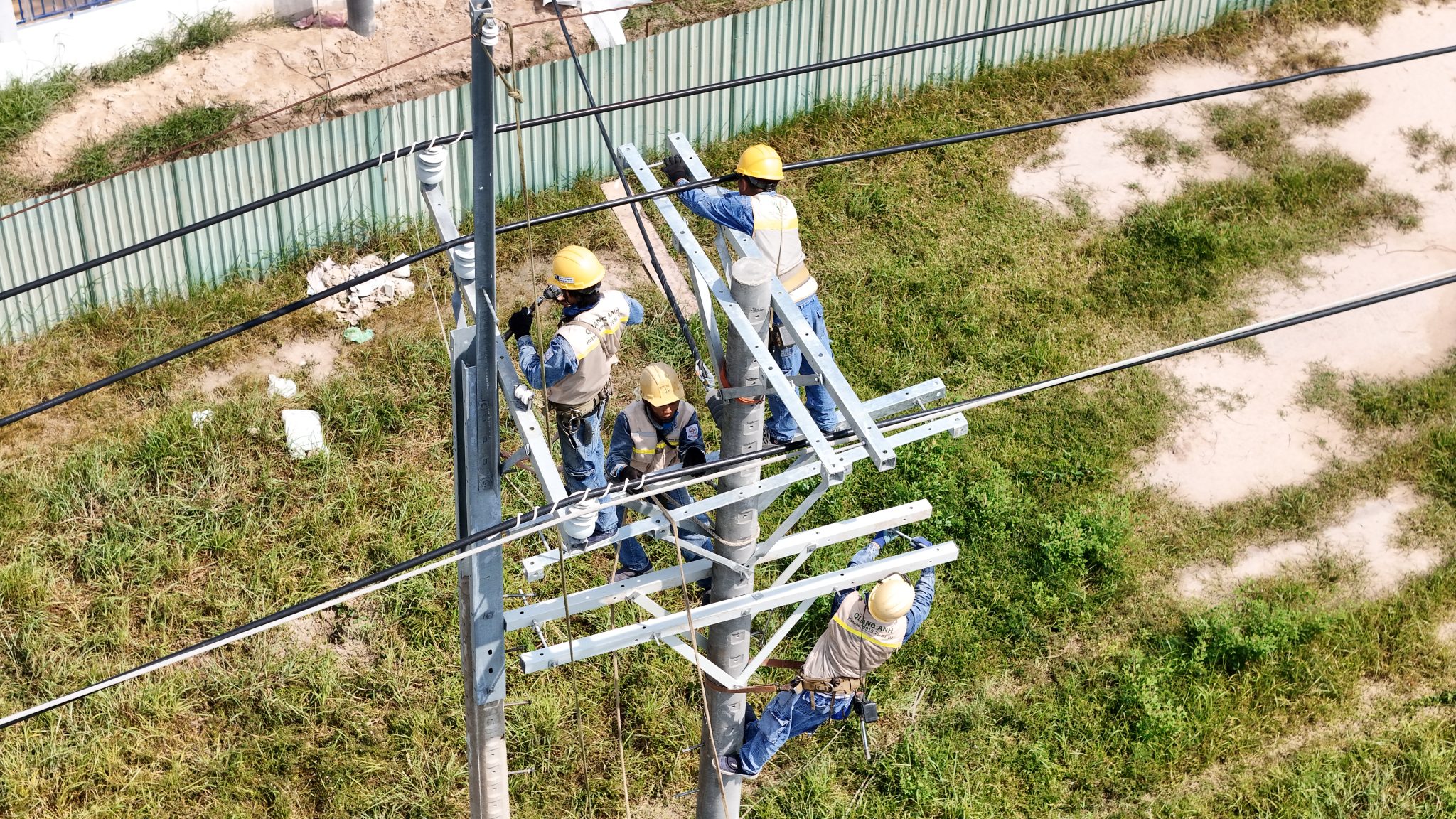
Industrial substation construction brings significant benefits, such as ensuring stable and safe power supply for industrial parks and large projects. A cautious process protects investments and enhances long-term usage efficiency.
Contact QuangAnhcons via Hotline: +84 9 1975 8191 for consultation and support in effective industrial substation construction.
QuangAnhcons provides industrial substation construction services, ensuring quality and safety to the highest standards, with a team of experienced technicians.
Substation budget estimate
Select the capacity, route lengths and package to view your indicative budget and electrical parameters.
Request a project quotation
Send your project details, BOQ or drawings to request a formal quotation. Fields marked * are required.
Quotation scope
Applies to one EVN-supplied substation with oil-immersed transformers at 22/0.4 kV (single-phase: 12.7/0.23 kV), with MV metering VTs/CTs supplied by EVN. The estimate includes the selected equipment, installation, earthing, transformer-to-main-breaker connections, design and connection documentation, and coordination of testing and utility acceptance.
Kiosk, integrated steel-pole and indoor substations include MV switchgear and the entered underground cable route. Other outdoor arrangements use the relevant protection configuration. The final diagram must meet the project connection requirements.
Excludes VAT, cables from the substation switchboard to the MSB/loads, live-line work, harmonic reactors, weak-ground treatment or special piling, land and special fire-protection provisions. Underground routes assume normal construction conditions and exclude road drilling and special reinstatement.
Prices are indicative investment budgets. A formal quotation follows site assessment and agreement on the configuration. Electrical selections are preliminary and require design verification before installation.
Capacity range and application conditions
The catalogue defines the enquiry range of this tool, not universal TCVN capacity limits. Single pole-mounted transformers: 15–100 kVA; three-unit banks: 3×15–3×100 kVA. Platform substations: 100–630 kVA. Steel-pole substations: 100–630 kVA; 750/800 kVA require design verification and local approval. Ground-mounted, kiosk and indoor configurations: 50–10,000 kVA. Not every configuration has a package price or the same structural design.
Reference: EVN Decision 1299/QD-EVN dated 3 November 2017, Volume 1, sections 3.3–3.4. Check the current requirements of the responsible utility before implementation. Kiosks must meet manufacturer ratings and testing requirements (IEC 62271-202); indoor and ground-mounted arrangements must meet project layout, ventilation, structural and fire-protection requirements. For multiple transformers, specify the quantity and capacity of each unit.
Developed by QuangAnhcons · © 2026 QuangAnhcons. Code licensed under GPL-2.0-or-later. Standards and manufacturer data belong to their respective owners.