In 2025, the cost of solar installation in Vietnam reflects diversity in capacity and installation conditions, ranging from households to large enterprises.
Installation costs by system capacity
Household solar installation costs in Vietnam in 2025 depend on the system capacity, with reference prices ranging from 35 million to 150 million VND depending on kWh. A 3 kWp system can produce 360-400 kWh/month with a cost of about 35–45 million VND, while a 10 kWp system generates 1,200 kWh/month costing between 90 and 150 million VND. For businesses, the solar installation cost is more favorable, priced from 8 to 10 million VND/kWp depending on the scale below or above 100 kWp.
Installation costs by capacity of solar power systems
Solar installation costs rely heavily on the system capacity you choose. With average costs ranging from 10 to 25 million VND per kW, solar energy systems are optimized for both efficiency and installation area.
Below is a reference price table for some popular capacities:
3 kWp system: Costs 35 – 45 million VND, produces an average of 360 kWh/month, requires about 18 m² of roof space.
5 kWp system: Costs 55 – 65 million VND, produces 550-600 kWh/month, requires between 25-30 m² of roof space.
8 kWp system: Costs 80 – 90 million VND, produces 960 kWh/month, requires about 40 m² of space.
10 kWp system: Costs 90 – 100 million VND, produces 1200 kWh/month, with a space requirement of about 50 m².
15 kWp system: Costs 135 – 145 million VND, produces 1800 kWh/month, requires 75 m² of space.
Factors affecting installation costs
Key factors influencing solar installation costs include:
System type: Choose between on-grid, off-grid, or hybrid systems.
System scale: Larger capacity systems will have a lower cost per kWp due to economies of scale.
Location and roof area: Minimum standards range from 6-8 m² per kWp.
Equipment quality: High-quality solar panels with superior performance are usually more expensive.
Construction costs: Depend on site conditions and installation techniques.
Electric generation efficiency and economic value
A 1 kW solar power system can produce about 4-5 kWh of electricity daily, varying by region and sunlight conditions. With EVN’s expected rooftop solar purchase price of around 1,940 VND/kWh, cost savings in electricity can easily be seen when installing larger systems for households with monthly electricity bills over 1.5 million VND.
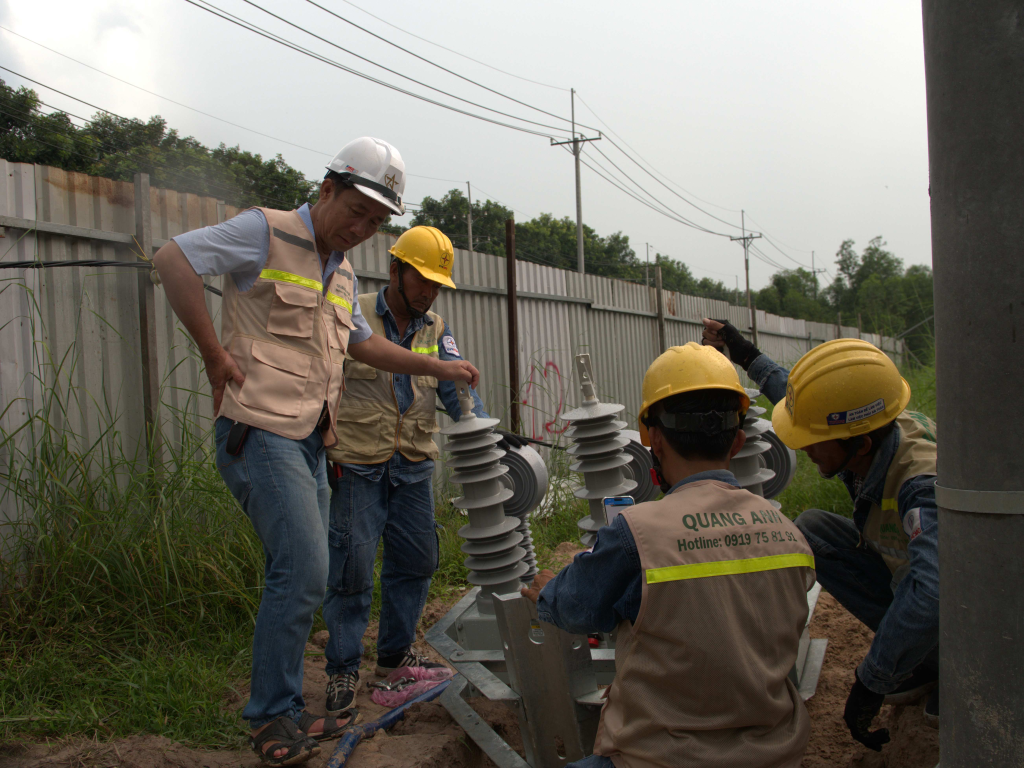
Solar installation cost chart by capacity.
Factors affecting solar installation costs
Numerous factors affect solar system installation costs, including installation location and roof structure, product type and solar panel technology, and required roof area. On average, 6-8 m² is needed per kWp of installed capacity. High-end products and technology lead to increased costs but offer better efficiency and durability.
To understand solar power pricing, it is necessary to consider several key factors that directly impact the system’s costs.
1. System scale and capacity
System capacity: The capacity, expressed in kWp, the higher the capacity, the greater the initial cost. But the electricity production capacity increases, allowing electricity to be sold to the national grid, providing long-term benefits.
System size: Larger systems require higher investments, yet save and produce more energy over time.
2. Component quality
Solar panels: The type and quality of solar panels significantly affect the cost and efficiency. High-quality panels from ABB and Schneider offer superior efficiency and longevity.
Inverters and hardware: Components like inverters from LS and Eaton, although high-priced, ensure reliability and sustainability for the entire system.
3. Location and installation conditions
Geographic location: Climate conditions and sunlight at the installation site affect efficiency and costs.
Roof structure: Roof structure impacts the convenience and cost of installation.
4. Government policies and regulations
Support policies: FIT price and support policies can improve investment feasibility.
Planning and pricing framework: Influences of national electricity planning and pricing framework on investment decisions.
5. Market and global economic conditions
Raw material prices: Difficulty in raw material supply increases production costs.
International trade taxes and policies: Impacts of taxes and trade policies on equipment import costs.
6. Social demand and consumption trends
Environmental protection viewpoint: Interest in environmental protection boosts the demand for solar energy.
Sustainable consumption trends: The shift to clean energy promotes panel technology industry development.
Solar energy pricing is not simply about cost factors but relies on a combination of many different factors, from capacity to technology to installation locations and system performance.
Factors affecting installation costs.
Government support policies
The Vietnamese government proposes financial support for rooftop solar systems, up to 500,000 VND per kWp but not exceeding 2.5 million VND per household. This policy helps reduce actual installation costs, encouraging households and businesses to invest in renewable energy sources.
Current government support policies are being implemented to bring significant benefits to businesses, especially small and medium enterprises, enterprises in remote areas, and units with strong social impact. In the context of renewable energy development, short and medium-term solutions are proposed to remove legal barriers, reduce costs for businesses, and enhance accessibility to preferential state-supported capital, particularly in green investment fields.
Short-term: Focus on removing legal obstacles to boost production and business, financial support, and ensure the supply chain is not disrupted. At the same time, focus on training and improving vocational skills for workers, contributing to job stability.
Medium and long-term: The government boosts improvement of the investment environment, promotes digital transformation, and restructures labor to enhance human resource quality in response to the industry 4.0 revolution’s requirements. These policies also help strengthen enterprises’ competitiveness during international integration.
Regarding financial support, a preferential interest rate support policy of 2%/year has been applied to private enterprises and individuals engaging in green projects. This not only helps save costs but also encourages them to apply ESG standards in business activities. Detailed direction and guidance from the State Bank and the Ministry of Finance will ensure this policy is effectively implemented by 2025.
Newly issued decrees also contribute significantly to supporting industry development, such as Decree No. 188/2025/ND-CP, 205/2025/ND-CP, and 200/2025/ND-CP. These documents detail benefit recipients, health insurance contributions, and allocation of relief resources to enhance disaster and natural disaster response capabilities in the context of sustainable development.
Currently, with government support policies, Vietnam is creating a favorable environment for enterprises to develop, overcome challenges, and reach sustainable development.
Government policies and support.
Investing in solar power brings numerous benefits, from reducing operational costs to enjoying government support policies. With technological advancement, solar energy systems are not only a sustainable step forward but also an optimal solution for long-term cost.
Contact QuangAnhcons at Hotline: +84 9 1975 8191 to consult and choose the most suitable solar energy solution for your needs.
QuangAnhcons specializes in providing and installing high-quality solar power systems, with many flexible options in capacity and professional after-sales services.

 Tiếng Việt
 简体中文
 Deutsch
 日本語
 한국어
 ไทย
 Русский
 Français