
 Tiếng Việt
 简体中文
简体中文 Deutsch
 日本語
日本語 한국어
한국어 ไทย
ไทย Русский
 Français

This article focuses on guiding project owners, project offices and M&E engineers on how to prepare a transformer substation connection agreement dossier to reduce the risk of delays in power supply. The content emphasizes the main information groups, the contractor’s role in finalizing drawings/field checks, common risks and practical steps to limit additional requests when coordinating with the power utility. [1]
A transformer substation connection dossier is the technical and legal package used to determine the connection point, assess the capability to supply requested capacity and schedule testing/energization — missing or incorrect information will delay energization.
To reduce variations, project owners should prepare the main information groups early (estimated power demand, site location, network status, single-line diagram and MV routing plan) and coordinate closely with the contractor to finalize drawings and the field inspection schedule.
- The connection agreement dossier identifies the connection point, required capacity and technical documents to be checked — it directly determines the energization schedule.
- Prepare early: surveying the existing network, estimating power demand, providing a single-line diagram and an MV routing plan reduces supplementary requests and acceptance delays.
- Contractor role: supply construction/connection drawings, propose technical options, coordinate inspections and support handover with the utility.
Who is this for?
- Project owners
- Manufacturing companies / project office
- M&E engineers
- Substation construction contractors
When to read this?
- When planning to invest in a substation or upgrade an existing one
- Before submitting a connection agreement/energization dossier
- When assigning responsibilities between the owner, contractor and the utility
Why the connection dossier determines the energization schedule
The connection dossier identifies the point, scheme and technical conditions, so it directly affects the time needed for review, site survey and commercial energization.
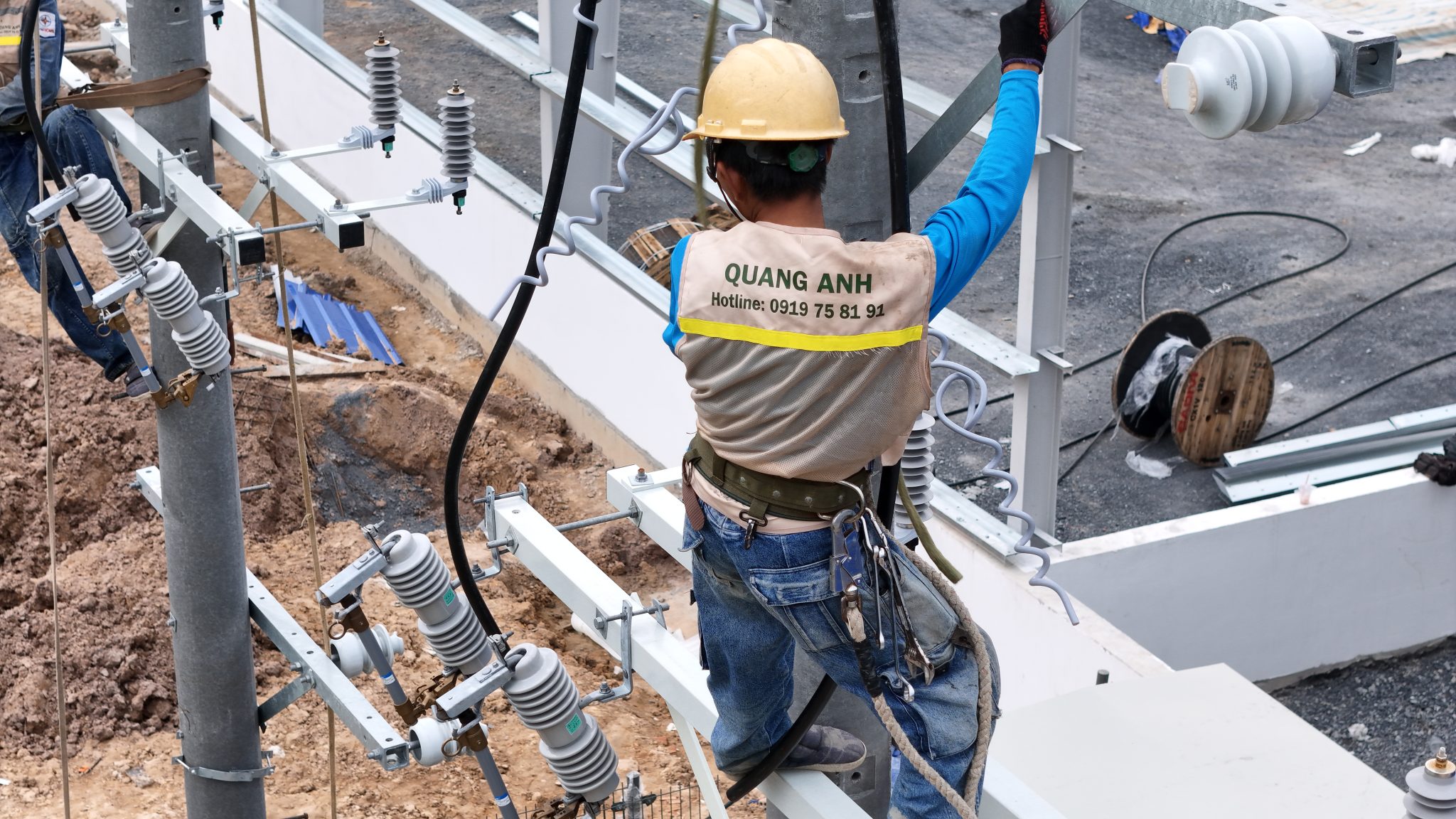
The connection dossier determines the energization schedule because it establishes the connection point, technical scheme and provides the basis for the distribution company to start technical appraisal. [6][8]
When surveying at the plant, the written record confirming the connection point issued by the distribution company (PC/EVN) is legal evidence to perform field surveys, check network capability and schedule equipment testing. Network capability checks (current loading, remaining connection capacity, protection and operating conditions) are usually carried out only after the technical dossier is fully submitted; the results directly affect the energization schedule and any reactive power compensation requirements.
In practice at industrial sites, a dossier that is incomplete or inconsistent with field conditions (for example pole location, cable type, substation location, equipment datasheets) leads to rounds of supplementary submissions, re-survey or adjustment of the connection scheme. Missing acceptance minutes, test certificates for transformer, ACBs, isolators, lightning protection or earthing will postpone acceptance and inspection, thereby delaying full energization.
- Field verification: confirm substation/pole location, clearances, cable types and the actual connection point versus the dossier drawings.
- Technical dossier requirements: complete drawings, equipment datasheets, field survey report, connection point confirmation and test certificates.
- Legal requirements: conformity confirmation with planning (Department of Industry and Trade), land use certificate / construction permit when necessary for commercial connection.
- Distribution company (PC/EVN) processing workflow: receive dossier → technical appraisal → draft connection agreement → signing (check the distributor’s internal timeframes).
Operational warning: changing the connection point after the agreement will generate additional surveys and renegotiation of schedule; during maintenance or when machinery is running on conveyors, any change in cable/substation location must be notified to avoid operational interruption. Project owners should prepare full field survey records, connection point confirmation and equipment acceptance minutes before dossier submission to reduce supplementary rounds.
Next step: check the currency of referenced guidance/circulars and directly compare the field survey record with the distribution company’s confirmation before preparing the official dossier.
Information groups and documents commonly required
The set of documents and field data to prepare includes a power summary, single-line connection diagram, site location and coordinates, and legal project documents.
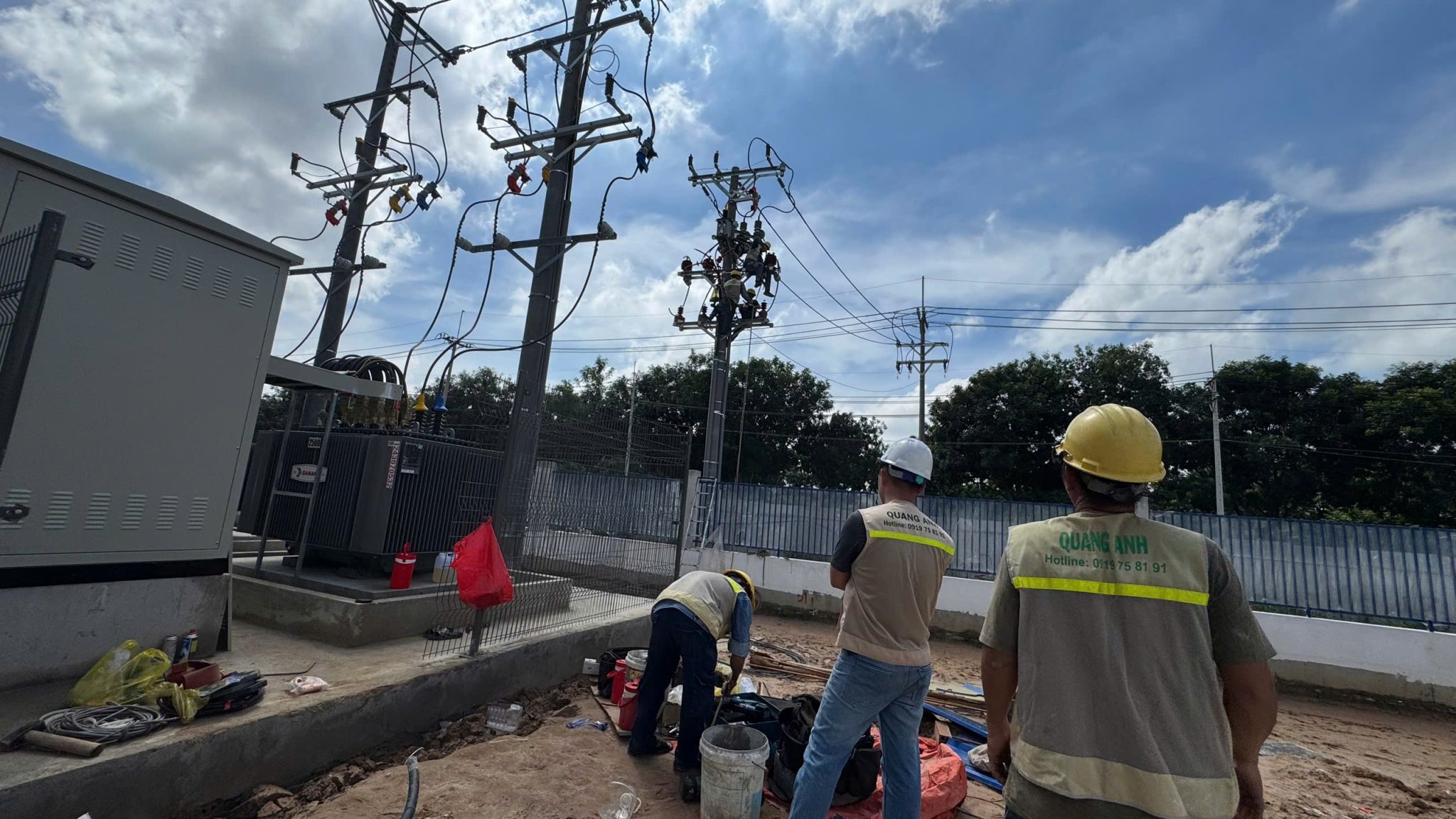
You should prepare a dossier set including a summary of power demand, single-line connection diagram, site location data (WGS84 coordinates) and related legal documents before submitting the connection agreement. [3][0]
On the field side, mandatory items include survey photos (site plan, nearest poles/cables), the site layout and elevation ± relative to the floor to compare pole positions and the MV route. When surveying at the plant, check distance to the nearest distribution substation, network type (ring or radial) and mark the proposed connection point on the map with WGS84 coordinates.
Technically, the dossier should include a load estimate table by equipment group (load name, actual power, cosφ, coincidence/modulation factors), peak demand and rated capacity summary, and a single-line diagram showing transformer, switches, ACB/CB, busbars, standby transformer and control/adaptation devices (TSC/OLTC) if applicable. If key data such as short-circuit current at the connection point or existing branch loads are missing, clearly note this and coordinate with the distribution company to obtain measured data or official values.
- Power demand summary: peak demand, rated capacity, base and dynamic loads.
- Load estimate table by equipment group: actual P, cosφ, coincidence factor.
- Site location: address, WGS84 coordinates, site layout and elevation.
- Survey photos: route axis of line/neighboring substation, existing poles/cables.
- Area network description: adjacent voltage level, network topology, distance to distribution substation.
- Proposed connection point information: network owner, pole/branch location.
- Single-line connection diagram and MV routing plan (overhead or underground).
- Metering and monitoring requirements: meter location, CT/PT, measurement points, communications/SCADA requirements.
- Safety and access information: protection corridor, technical clearances, construction routing.
- Relevant project legal documents (if any): investment license, construction registration, investment decision.
The high-level dossier list can be presented in a summary table for easy pre-submission checking. From a technical decision perspective, if the field survey finds the connection point differs from the original dossier, update the single-line diagram, recalculate load distribution and notify the distribution company with short-circuit data — this determines switching capability and protection device requirements.
| Item | Short description | Field note |
|---|---|---|
| Power summary | Peak, rated, base/dynamic loads | Confirm via load table and inspect equipment descriptions on site |
| Single-line diagram | Transformer, switches, CB, busbars, standby transformer | Mark proposed connection point on the site layout |
| MV routing plan | Overhead or underground, cable/wire type, pole positions | Take photos of the route and record joint coordinates |
Operational warning: if the dossier lacks short-circuit data or existing branch loads, the distributor often requests additional data or new measurements, causing connection delays. After preparing the dossier, schedule a preliminary submission to the distributor so they can check network capability and identify parameters needing supplementation before finalizing the connection agreement.
The contractor’s role in supporting dossier preparation and acceptance coordination
The contractor’s responsibilities in the connection dossier include field survey, construction design, testing, coordinating acceptance and handover with the utility.
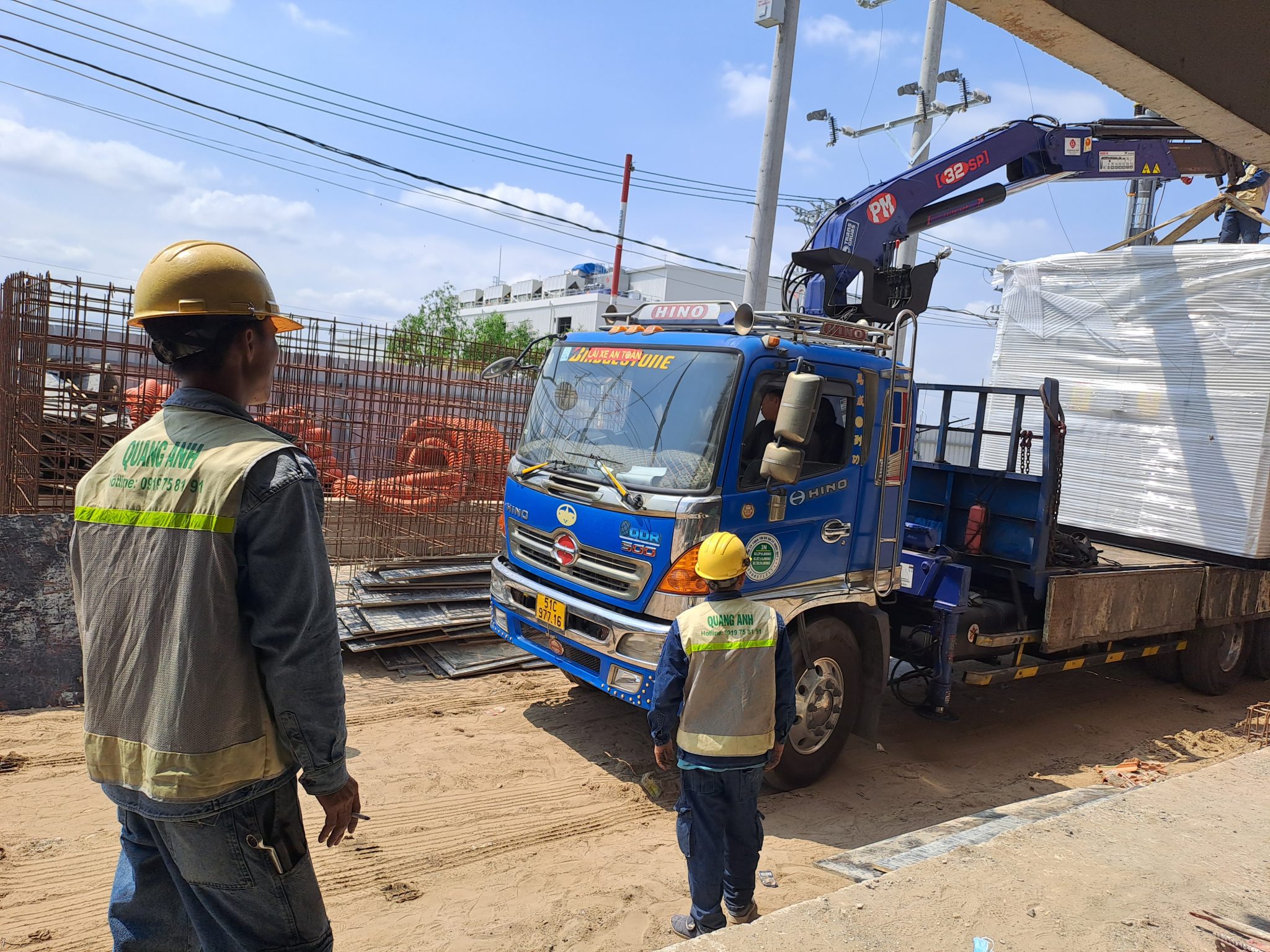
The contractor is the primary technical party responsible for survey work, preparing construction/connection drawings, performing tests and coordinating acceptance with the distribution company. [5][0]
On site, the contractor must survey the connection route, substation condition and circuit capacity to propose the circuit layout and transformer location. Minimum on-site checks during a plant survey include meter location measurement, verifying the transformer foundation space and recording earthing conditions.
Contractor-provided drawings and documents should be split into preliminary drawings for appraisal and construction drawings for acceptance, accompanied by an equipment list and technical specifications. Test documentation must include test logs, calibration records, equipment certificates and acceptance minutes before handover.
- Field survey dossier: connection coordinates, survey photos, circuit capacity data.
- Drawings: connection diagram, earthing layout, cable route, transformer foundation details.
- Acceptance documents: test procedures, insulation test minutes, ratio tests, load tests, handover minutes.
The contractor must proactively prepare test equipment and test procedures, and coordinate switching schedules with the utility to run trials and accept the energization. If the connection point changes after dossier submission, technical schemes must be revised and resubmitted for appraisal, which may delay acceptance.
Responsibilities should be formalized by a handover record between the project owner and contractor, specifying work scope, deadlines, acceptance conditions and responsibility for providing load data. Regarding safety and QC, the contractor is responsible for implementing quality control per the contract and complying with occupational safety procedures during construction/transmission/connection.
At completion of this work package, it is recommended to prepare a handover record and a detailed survey schedule to lock acceptance milestones: technical handover, construction completion, pre-acceptance testing and energization acceptance.
Common risks in the connection process and mitigation
Common connection risks include incomplete dossiers, connection point changes, equipment mismatch and delayed inspections, plus field mitigation measures.
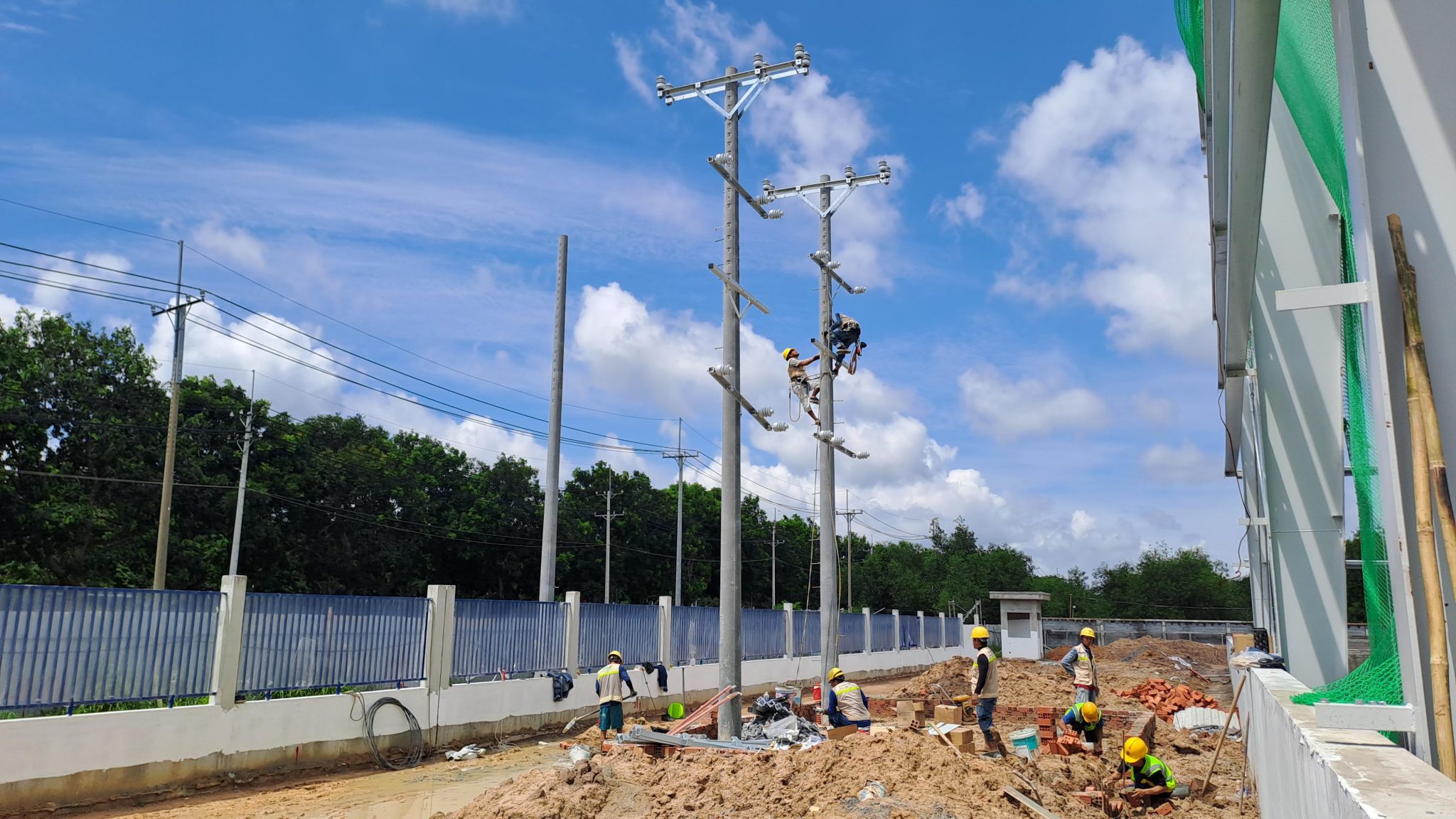
Common connection risks include incomplete dossiers, change of connection point, equipment mismatch and delayed inspections, together with field mitigation measures. [3][12]
On site, common signs are dossiers submitted without signatures or as-built drawings, actual equipment types different from the tender dossier, and inspection/energization schedules postponed due to unclear coordination. When surveying at the plant, check the primary and backup metering locations and compare the equipment list on site with the technical dossier.
Practical mitigation includes early written confirmation of the connection point and a working record; strict drawing version control; harmonizing the equipment list in the tender dossier; and fixing inspection schedules with a clear contact at the distribution company. During maintenance or before the first energization, have at least two sets of dossier documents for inspection of connection conditions.
Below are field checks and quick criteria to detect risks before submission or when requesting changes:
| Risk | Field check / Criteria |
|---|---|
| Incomplete or wrong-format dossier | Cross-check dossier checklist: signatures, drawings, equipment certificates, metering documents |
| Connection point change after submission | Check survey minutes, confirm coordinates / MCC / substation and obtain written agreement |
| Design–equipment mismatch | Check equipment nameplates, CT/CB/meter types and compare with tender dossier |
Operational warnings to note: connection point changes without a written agreement may require adjusted acceptance schedules and additional tests; incorrect metering arrangement affects payments and acceptance. Therefore, maintain a clear contact at the distribution company and fixed inspection schedules before energization.
Natural next step: conduct a field survey with a checklist, update drawing versions and send the connection point confirmation to the distributor to prevent last-minute changes.
Practical checklist: how to prepare the dossier to reduce extras
The MV connection dossier should collect power data, site drawings, 1‑line connection diagram, survey minutes and a field inspection schedule.
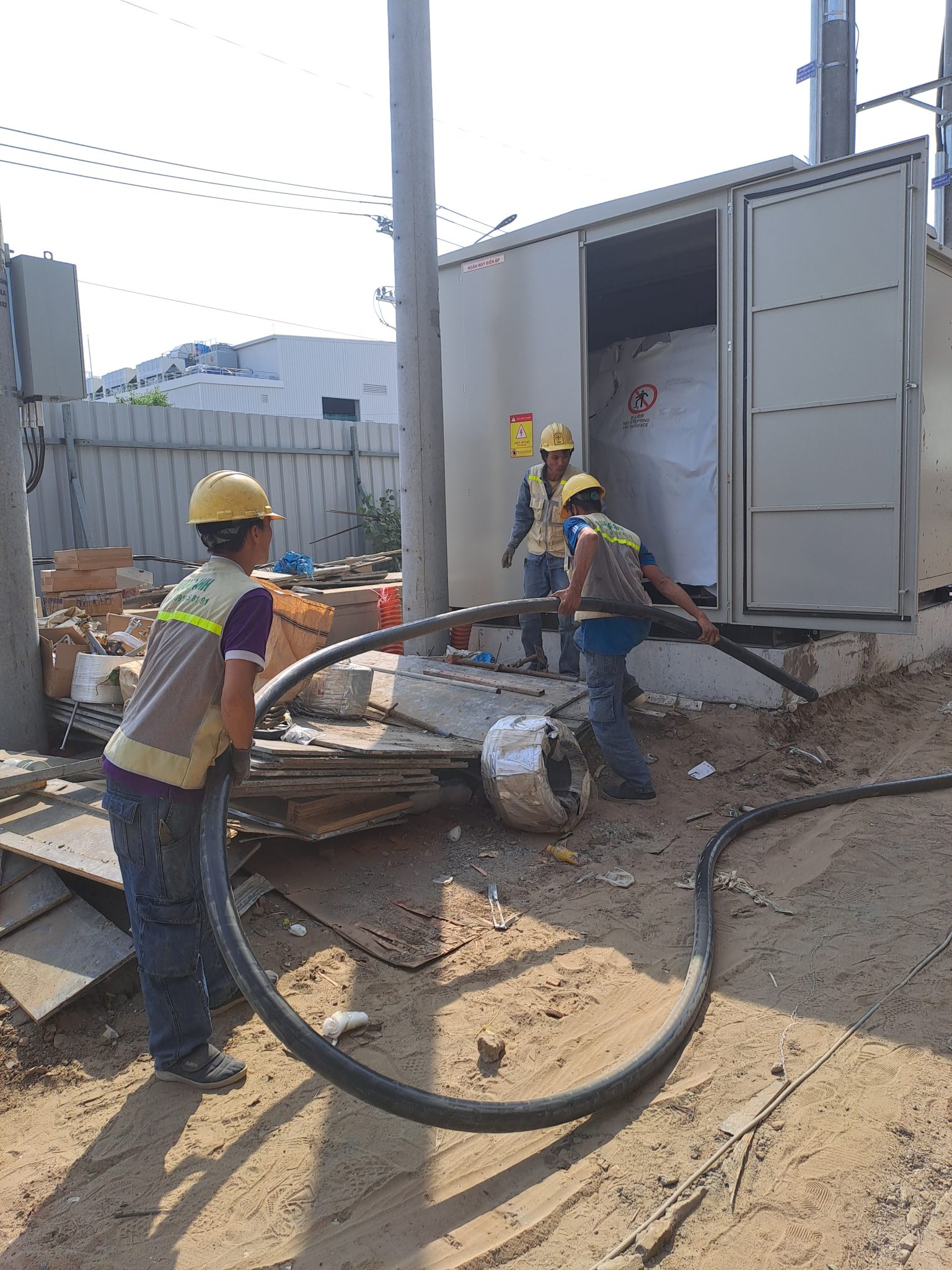
The checklist should include technical dossiers and legal documents to shorten the time for the connection agreement. [8][0]
From a technical perspective, the objective is to present the power and connection diagram clearly to reduce supplementary requests from the distributor. During maintenance or plant surveys, include a field survey record with photos as evidence of network status and the cable route.
Below is the practical dossier list and verification criteria, organized by submission sequence and field inspection.
- Power and load information: rated capacity, short-term/maximum capacity, coincidence factor, load distribution by phase and load type; verify the actual load table during survey.
- Site drawings and layout: substation location on the map, site boundaries, connection line routing and distances to adjacent structures; on site take photos of reference points and the cable route.
- 1-line connection diagram (single-line): clearly show the proposed connection point, transformer diagram, protection, metering and switching; check voltage compatibility and connection type at the point.
- Field survey minutes: record date/time, participants, network status at the connection point, cable/line condition and supporting photos; include signatures or confirmations from site representatives.
- Preliminary confirmation from the distribution company (if any): a document agreeing the connection location or a working record; this is decisive in reducing change requests after submission.
- Main equipment list and preliminary specs: transformer, isolator, CB, control cabinet, CT/PT with power, voltage, connection type and proposed protection; verify equipment types against the design dossier.
- Owner legal documents: business registration, decision of establishment/authorization of representative, land use documents when the substation location involves property issues.
- Timeline / acceptance schedule: dossier submission milestone, survey schedule, field inspection dates and estimated acceptance/energization times; include responsible contacts.
- Metering and meter location requirements: define primary and backup metering positions per connection content; during acceptance the meter location must be clearly shown on the diagram.
- Electrical safety & fire safety documents: construction safety plan, protection of safety corridors and fire safety documents if the substation is inside a building.
- Contingency plan: common risks and contact points, for example connection point change or land clearance issues.
For dossier organization, prepare a submission checklist grouped by: technical, legal, distribution confirmations and survey schedule. At acceptance, prepare provisional acceptance minutes and a list of missing items (if any) to shorten administrative feedback.
Operational warning: without preliminary confirmation from the distributor or with an unconfirmed connection point, the dossier risks supplementary requests and delays. In practice, changes to the connection point after submission will require design adjustments and additional costs.
Light conclusion: after completing the above list, schedule a site survey with the distributor representative and prepare the survey minutes, 1-line diagram and copies of legal documents to submit as required.
References and regulatory update requirements
Differentiates EVN/PC guidance, Ministry of Industry and Trade circulars and QCVN/TCVN from international technical standards, with a requirement to verify issue dates and areas of application.
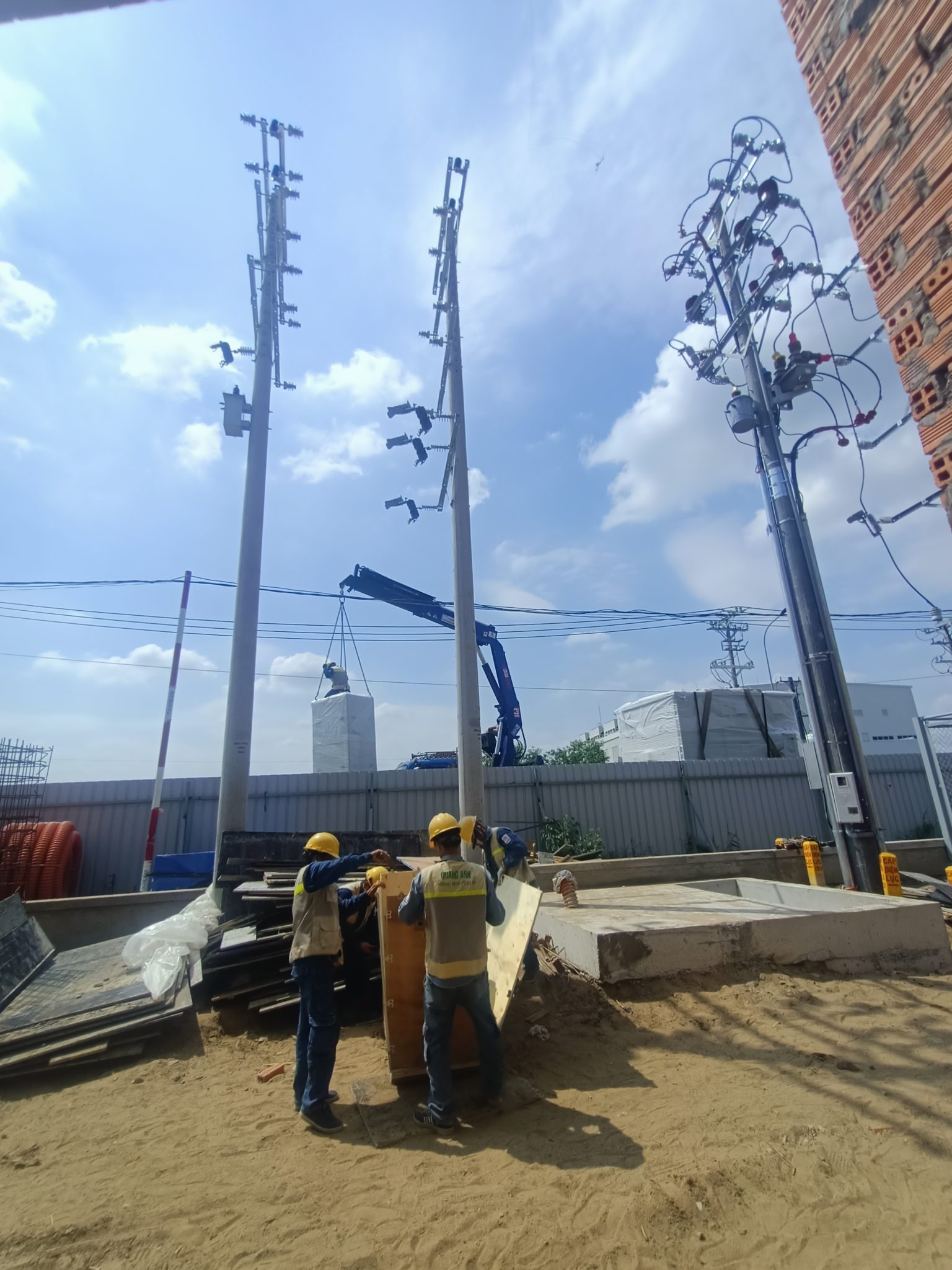
Main references include EVN/PC guidance documents, Ministry of Industry and Trade circulars and QCVN/TCVN standards; IEC/ISO standards are used as technical references. [0][0]
Technically, EVN/PC documents often include operational, safety and local requirements for connection work; circulars and QCVN/TCVN are statutory documents that regulate procedures and technical standards. IEC/ISO standards should only be used for design or test criteria when domestic documents do not specify details. When surveying at the plant, identify which EVN/PC document applies to the distribution area to avoid applying incorrect requirements.
During maintenance or when preparing the connection dossier, verify the issue/effective dates of all referenced documents; current practice recommends recording the verification of effective dates (prefer documents effective from 2024 onward for procedural/legal content). If a document lacks a clear date or predates 2024, contact the local PC/EVN to verify current applicability before using it.
- Practical check: verify the document code, issue date and issuing authority during the field survey.
- Determine scope: match the EVN/PC document to the network management area at the connection point.
- Compare content: if there is a conflict between EVN/PC documents and a circular, prepare a record noting the contradiction and request written confirmation from the competent authority.
Warning: do not use outdated documents as the basis for the connection procedure; changes to the connection point or guidance after dossier submission may require technical revisions and extend the acceptance timeline. Complete document verification and field survey before preparing the final dossier.
Preparing a complete connection dossier with confirmation of field conditions and a clear connection scheme, together with close coordination with the contractor and the utility, is the most effective way to reduce the risk of energization delays. Next step: draft a summary of power requirements, site location and network status to start the field survey.
Frequently asked questions
Which steps in the energization schedule are directly affected by the connection agreement dossier?
The connection agreement dossier directly affects: defining the connection point, appraising network capability, preparing the technical scheme, scheduling field inspections, signing the agreement and energization. Missing information usually leads to requests for supplements and delays. Provide power demand, 1‑line diagram, survey and legal documents.
When should a field survey be performed to avoid supplementary requests?
Perform the field survey early, before formal dossier submission or immediately after determining power and site. The survey should record coordinates, survey photos, distance to the nearest line/substation and transformer/metering positions; this reduces the chance of additional survey requests and delays.
Who is responsible for providing the single-line diagram and connection drawings?
Typically the contractor is responsible for preparing the single-line diagram and connection drawings (preliminary for appraisal, construction for acceptance). The project owner provides power requirements, legal papers and site confirmation. Principle: define responsibilities in the contract; if unclear, prepare a task handover record before dossier submission.
What are the usual consequences if the connection point changes after submission?
Changing the connection point after submission usually leads to supplementary dossiers, re-survey, design adjustments and postponed inspection/energization; may incur costs and technical constraints. When changing, state the reason, new coordinates, photos and impact assessment on the network for the distributor to review.
Are there official sources to reference the MV connection procedure locally?
Official sources include documents from regional EVN/PC, Ministry of Industry and Trade circulars and relevant QCVN/TCVN; each PC may have regional guidance. Principle: request documents with issue dates and scope; if necessary, contact the regional PC directly for an updated list of documents and URLs.
Practical steps to prepare a transformer substation connection dossier
- Step 1 — Collect initial information: gather requested power (kW/kVA), load types, timing of demand and future capacity expansion plans.
- Step 2 — Early field survey: check location, distance to the MV line, condition of poles/existing connection points and take photos of network status at the proposed location.
- Step 3 — Work with the contractor to finalize drawings: request single-line connection diagram, MV routing plan, site layout and preliminary construction drawings.
- Step 4 — Identify the proposed connection point and obtain preliminary confirmation from the distribution company (regional EVN/PC) before formal dossier submission.
- Step 5 — Plan field inspections and acceptance schedule: coordinate with the contractor and the utility to agree on inspection timing, the list of documents and equipment nameplates to be checked.
- Step 6 — Package and submit the dossier: compile power summary, drawings, field survey minutes, project legal documents (general, not an exhaustive list) and technical documents; track responses and prepare a contingency plan for supplements if needed.
Please send the project site, requested power and a description of the existing power supply so QuangAnhcons can advise on how to prepare an appropriate connection dossier.
References (12)
Reference principle: prioritize official and traceable sources (regional EVN/PC, Ministry of Industry and Trade documents, QCVN/TCVN, IEC/ISO/IEEE standards when needed). All procedural claims must link to a document or official page with an effective date (preferably >= 2024 for legal/procedural content). Do not list mandatory dossier items without citing an official source; when using local guidance (provincial PC/EVN), cite the URL and specify scope of application.
-
tcvn.gov.vn
Official source from tcvn.gov.vn, used to verify technical or regulatory references mentioned.
-
Quy hoach ke hoach tieu chuan hoa
Official source from tcvn.gov.vn, used to verify technical or regulatory references mentioned.
-
PDF document | Related guidance (EVN userfile) | EVN | 2020 (guidance/forms related to connection/metering)
Official source from evn.com.vn, used to verify technical or regulatory references mentioned.
-
Thong tu 2025: regulations on distribution transmission and energy metering
Official source from cskh.evnhcmc.vn, used to verify technical or regulatory references mentioned.
-
Government approval of tender plan for Lai Chau hydropower
Official source from evn.com.vn, used to verify technical or regulatory references mentioned.
-
Official document or guidance from EVNSPC
Official source from pcvinhlong.evnspc.vn, used to verify technical or regulatory references mentioned.
-
Official document or guidance from EVNSPC
Official source from pccamau.evnspc.vn, used to verify technical or regulatory references mentioned.
-
EVN news on site inspections and project progress
Official source from evn.com.vn, used to verify technical or regulatory references mentioned.
-
Ministry of Industry and Trade regulations on operation and restoration
Official source from moit.gov.vn, used to verify technical or regulatory references mentioned.
-
Ministry draft on pricing framework for small renewables
Official source from moit.gov.vn, used to verify technical or regulatory references mentioned.
-
Ministry draft circular on protection of power facilities and safety
Official source from moit.gov.vn, used to verify technical or regulatory references mentioned.
-
EVN article on connection cost responsibilities for power plants
Official source from evn.com.vn, used to verify technical or regulatory references mentioned.
Substation budget estimate
Select the capacity, route lengths and package to view your indicative budget and electrical parameters.
Request a project quotation
Send your project details, BOQ or drawings to request a formal quotation. Fields marked * are required.
Quotation scope
Applies to one EVN-supplied substation with oil-immersed transformers at 22/0.4 kV (single-phase: 12.7/0.23 kV), with MV metering VTs/CTs supplied by EVN. The estimate includes the selected equipment, installation, earthing, transformer-to-main-breaker connections, design and connection documentation, and coordination of testing and utility acceptance.
Kiosk, integrated steel-pole and indoor substations include MV switchgear and the entered underground cable route. Other outdoor arrangements use the relevant protection configuration. The final diagram must meet the project connection requirements.
Excludes VAT, cables from the substation switchboard to the MSB/loads, live-line work, harmonic reactors, weak-ground treatment or special piling, land and special fire-protection provisions. Underground routes assume normal construction conditions and exclude road drilling and special reinstatement.
Prices are indicative investment budgets. A formal quotation follows site assessment and agreement on the configuration. Electrical selections are preliminary and require design verification before installation.
Capacity range and application conditions
The catalogue defines the enquiry range of this tool, not universal TCVN capacity limits. Single pole-mounted transformers: 15–100 kVA; three-unit banks: 3×15–3×100 kVA. Platform substations: 100–630 kVA. Steel-pole substations: 100–630 kVA; 750/800 kVA require design verification and local approval. Ground-mounted, kiosk and indoor configurations: 50–10,000 kVA. Not every configuration has a package price or the same structural design.
Reference: EVN Decision 1299/QD-EVN dated 3 November 2017, Volume 1, sections 3.3–3.4. Check the current requirements of the responsible utility before implementation. Kiosks must meet manufacturer ratings and testing requirements (IEC 62271-202); indoor and ground-mounted arrangements must meet project layout, ventilation, structural and fire-protection requirements. For multiple transformers, specify the quantity and capacity of each unit.
Developed by QuangAnhcons · © 2026 QuangAnhcons. Code licensed under GPL-2.0-or-later. Standards and manufacturer data belong to their respective owners.