
 Tiếng Việt
 简体中文
简体中文 Deutsch
 日本語
日本語 한국어
한국어 ไทย
ไทย Русский
 Français

Chọn hệ Solar & lưu trữ cho công trình
Từ nhu cầu sử dụng điện đến cấu hình và dự toán sơ bộ. Không cần thông tin liên hệ.
Cụm tính toán tự động trước khảo sát
Kết quả hiện ở đây khi nhập đủ dữ liệu: diện tích pin, phần phụ trợ, mái cần dùng, tải module, công suất và cấu hình điện.
Phát triển và vận hành bởi QuangAnhcons. Kết quả sơ bộ cần khảo sát và xác nhận bằng văn bản trước khi đặt hàng hoặc thi công.
Solar 8.19.0 · QAC-UI-QUOTE 1.1.0
© 2026 CÔNG TY TNHH XÂY LẮP ĐIỆN QUANG ANH. Báo giá được lập bởi QuangAnhcons. Vui lòng giữ nguyên tên đơn vị lập và số tham chiếu khi lưu hoặc chia sẻ. Tên và tài liệu của bên thứ ba thuộc chủ sở hữu tương ứng.
This article describes the calculation framework and determining factors when selecting transformers for a rooftop solar installation with a total capacity of approximately 9,700 kWp. It focuses on the data to collect (DC/AC capacity, inverter AC/DC ratio, point of connection and short‑circuit level), the electrical variables that affect transformer sizing and type (impedance, inrush, harmonics, overload capability), and the EVN/QCVN connection and acceptance requirements. The goal is to provide an analysis checklist to prepare technical specifications and support design decisions. [1]
Start from input data: DC capacity 9,700 kWp, the actual AC capacity of the inverter cluster (depends on the AC/DC ratio), and the characteristics of the point of connection (PCC, short‑circuit level).
Select transformers by required kVA (calculated from AC output plus margins), and at the same time check impedance, inrush current, temporary overload capability, and harmonic filtering requirements; for a large system like 9.7 MWp consider multiple transformers in parallel or load-segregated solutions.
The final decision must balance technical requirements with EVN/QCVN connection rules and site constraints (space, cooling, maintenance).
Who is this article for?
- Energy/electrical design engineers at owner or EPC firms
- Plant technical teams preparing to connect a large rooftop system
- Planners/quantity surveyors who need transformer and connection parameters for cost take-off
When to read this?
- When preparing preliminary design documents or a feasibility report for a ~9.7 MWp rooftop system
- Before tendering/issuing technical requirements (TDS) for transformers and medium-/low-voltage connection
- When checking grid connection feasibility with EVN or defining a parallel transformer configuration
Project classification: when a rooftop system is treated as rooftop PV vs a large project
Legal criteria for the 1 MW threshold, distinction between rooftop PV and large projects, and the impact on connection procedures and transformer selection.

Rooftop PV is considered “rooftop” when installed on a roof, total capacity ≤ 1 MW and connection voltage ≤ 35 kV; any 9,700 kWp (9.7 MWp) system exceeds this threshold and must be handled as a large grid-connected project. [1][2]
Legally, the 1 MW threshold determines the feed-in tariff regime and the connection process. Systems >1 MW usually require negotiated connection procedures with transmission/distribution operators, an assessment of the line and transformer absorption capability, and more complex registration/permits compared with rooftop PV under Decision 13. During plant survey check the total inverter nameplate capacities to reconcile with documents submitted to EVN.
Documents submitted to EVN/Power Company typically include: point-of-connection drawings, inverter and transformer datasheets, PCC location, power management scheme (limit injection, reactive power control) and documentation confirming total installed capacity. During maintenance or site survey, focus checks are: inverter rated capacities, metering indexes for import/export, and the capacity of existing transformers to absorb injected power.
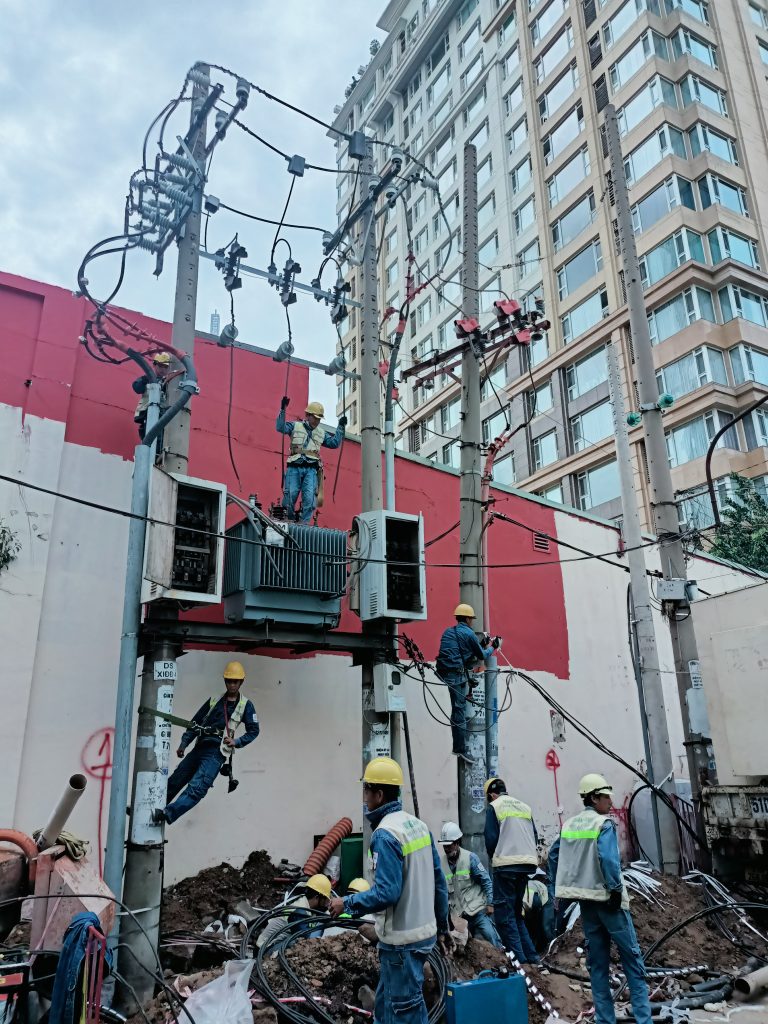
For transformer design on a large rooftop like 9.7 MWp, consider dividing into multiple substations or transformer groups, choose the appropriate connection voltage level (e.g. 22/35/110 kV depending on conditions), size individual units, cooling capability, losses and impact on short-circuit level. At commissioning/commissioning tests, check the existing transformer and line loading because EVN may require grid or equipment upgrades before approving the connection.
Note that splitting capacity to bring each part under ≤1 MW may be regarded as regulatory circumvention; EVN has requested guidance from the Ministry of Industry and Trade on this matter. Operating a large system connected at medium/high voltage requires power control schemes, injection limits, reverse-flow protection and monitoring systems (e.g. SCADA/SEMS) to reduce risks to the grid and equipment.
Technical decisions should start with a full site survey and connection impact assessment; only after survey results can the connection configuration, number of transformers and scope of documents for EVN be determined.
| Item | Description | Key checks |
|---|---|---|
| Project classification | Rooftop PV if ≤1 MW and connection ≤35 kV; >1 MW treated as a large project | Confirm total inverter capacity; connection location |
| Connection documentation | Connection drawings, inverter/transformer datasheets, power management scheme | Verify inverter nameplates; meter indexes for commercial connection |
| Transformer selection | Substation segmentation, choose voltage level and capacity, cooling capability | Check existing loading, short-circuit level, temporary overload capability |
Selecting transformers for a 9,700 kWp rooftop system is a decision that combines power calculations, grid limits and acceptance requirements. The next step is to collect full connection data, determine the actual AC output from the inverter cluster and prepare detailed technical specifications for tendering/design documentation.
Frequently asked questions
Should transformer capacity be calculated in kVA or kW when designing for PV?
Calculate transformer capacity in kVA because transformers are rated in kVA and power factor must be considered. If data are missing, apply the rule: take the AC power at the grid interface and the expected PF, add margins for overload/emergency. Also collect: total AC rating of the inverter cluster, PF, overload margin, short‑circuit level.
What AC/DC (inverter oversizing) ratio is recommended for a large rooftop?
AC/DC ratio must balance energy yield and grid limits; there is no single correct number. The principle: use moderate oversizing to reduce clipping but avoid increasing harmonics and inrush currents. Required data: irradiance profile, inverter characteristics, connection limits and EVN requirements.
Should you choose dry-type or oil-filled transformers for a 9,700 kWp rooftop?
The dry vs oil choice depends on: space constraints, fire risk, cooling requirements, short-circuit withstand and operating cost. Principle: prefer dry-type in areas with fire-safety limits; oil-filled if better cooling is needed and capital cost is lower. Need short‑circuit level, available space and maintenance requirements.
When is it better to use multiple transformers in parallel instead of one large unit?
Use multiple parallel transformers when segmentation, redundancy, installation size/weight limits, or inrush/short‑circuit constraints prevent a single large transformer. Principles: prioritize availability and maintainability; collect: total kVA, space limits, short-circuit level and operational requirements.
What are the main EVN acceptance requirements for a PV system of this scale?
EVN acceptance usually requires technical documentation and test evidence: connection contract, single-line diagram, inverter/transformer datasheets, insulation tests, protection and relay coordination tests, commissioning report, and monitoring/SCADA data. If missing, request diagnostics: connection point, total AC, short‑circuit level and protection settings.
Main steps to calculate and select transformers for a 9,700 kWp rooftop project
- Collect project data: total DC capacity (9,700 kWp), inverter configuration (AC rating, number of inverters), point of connection (PCC), medium-/low-voltage connection level, short‑circuit level, background load and load characteristics.
- Determine the system’s actual AC capacity: apply the chosen AC/DC ratio (record total AC rating of the inverter cluster) to know peak grid injection.
- Calculate kVA requirement for transformers: convert AC power using the expected power factor (PF), add margin to handle temporary overload and inrush current; consider losses and future upsize requirements.
- Assess electrical factors: choose transformer impedance to control fault currents, analyze harmonics (THD) and filtering options if needed, consider anti‑islanding and inverter compatibility.
- Decide physical configuration: single large transformer or multiple transformers in parallel, dry-type or oil-filled, OLTC requirement for wide voltage regulation.
- Design protection and coordination: protection relays, ACB/VCB, inrush limiting devices and ensure compliance with EVN/QCVN acceptance; prepare commissioning and monitoring documentation.
- Prepare technical specifications (TDS) for tender: include input data, performance criteria, test requirements, installation, maintenance and acceptance documentation.
If required, the QuangAnhcons technical team can assist with site data collection and preparation of transformer technical specifications for tendering or acceptance.
References (13)
Technical content must cite official sources: EVN documents and power company guidance for connection/operation; QCVN/Ministry of Industry and Trade circulars for classification and rules; IEC/ISO/IEEE standards for technical recommendations (specify versions). Avoid using manufacturer documents as the primary source when stating standards; all important technical figures should link to official documents or pages for traceability. When referencing international standards (IEC), check and record the version applicable at design time. Record source and access date for all regulatory/acceptance information.
-
EVN official letter requesting Ministry of Industry and Trade guidance on distinguishing rooftop and ground-mounted PV
Regulatory/standard document used to cross-check technical requirements mentioned in the article.
-
EVN announcement on rooftop PV feed-in
Official EVN source to verify regulatory or technical information referenced.
-
SEMS rooftop PV monitoring and control recognized as a Make-by-EVN product
Official EVN source to verify regulatory or technical information referenced.
-
Reasons EVN proposed rooftop PV registration adjustments
Official EVN source to verify regulatory or technical information referenced.
-
EVN continues to issue requests to the Ministry for specific rooftop PV guidance
Official EVN source to verify regulatory or technical information referenced.
-
Official EVNSPC guidance or document
Official EVNSPC source to verify referenced technical/regulatory information.
-
Official EVNSPC guidance/document
Official EVNSPC source to verify referenced technical/regulatory information.
-
Q&A: three rooftop PV systems installed on one roof
Official Ministry source to verify referenced regulatory information.
-
City-wide rooftop PV connection in Ho Chi Minh City
Official EVN source to verify referenced technical/regulatory information.
-
Regulations and guidance for rooftop PV development
Official EVNHCMC source to verify referenced technical/regulatory information.
-
Practical notes for using rooftop PV
Official VNEEC source to verify referenced technical/regulatory information.
-
IEC publication
Official IEC publication used to verify technical recommendations.
-
IEC publication
Official IEC publication used to verify technical recommendations.
Substation budget estimate
Select the capacity, route lengths and package to view your indicative budget and electrical parameters.
Request a project quotation
Send your project details, BOQ or drawings to request a formal quotation. Fields marked * are required.
Quotation scope
Applies to one EVN-supplied substation with oil-immersed transformers at 22/0.4 kV (single-phase: 12.7/0.23 kV), with MV metering VTs/CTs supplied by EVN. The estimate includes the selected equipment, installation, earthing, transformer-to-main-breaker connections, design and connection documentation, and coordination of testing and utility acceptance.
Kiosk, integrated steel-pole and indoor substations include MV switchgear and the entered underground cable route. Other outdoor arrangements use the relevant protection configuration. The final diagram must meet the project connection requirements.
Excludes VAT, cables from the substation switchboard to the MSB/loads, live-line work, harmonic reactors, weak-ground treatment or special piling, land and special fire-protection provisions. Underground routes assume normal construction conditions and exclude road drilling and special reinstatement.
Prices are indicative investment budgets. A formal quotation follows site assessment and agreement on the configuration. Electrical selections are preliminary and require design verification before installation.
Capacity range and application conditions
The catalogue defines the enquiry range of this tool, not universal TCVN capacity limits. Single pole-mounted transformers: 15–100 kVA; three-unit banks: 3×15–3×100 kVA. Platform substations: 100–630 kVA. Steel-pole substations: 100–630 kVA; 750/800 kVA require design verification and local approval. Ground-mounted, kiosk and indoor configurations: 50–10,000 kVA. Not every configuration has a package price or the same structural design.
Reference: EVN Decision 1299/QD-EVN dated 3 November 2017, Volume 1, sections 3.3–3.4. Check the current requirements of the responsible utility before implementation. Kiosks must meet manufacturer ratings and testing requirements (IEC 62271-202); indoor and ground-mounted arrangements must meet project layout, ventilation, structural and fire-protection requirements. For multiple transformers, specify the quantity and capacity of each unit.
Developed by QuangAnhcons · © 2026 QuangAnhcons. Code licensed under GPL-2.0-or-later. Standards and manufacturer data belong to their respective owners.