
 Tiếng Việt
 简体中文
简体中文 Deutsch
 日本語
日本語 한국어
한국어 ไทย
ไทย Русский
 Français

Tính giá điện mặt trời mái nhà
Nhập công suất hoặc diện tích mái để tự động xem cấu hình và giá tham khảo. Không cần thông tin liên hệ.
Cụm tính toán tự động trước khảo sát
Kết quả hiện ở đây khi nhập đủ dữ liệu: diện tích pin, phần phụ trợ, mái cần dùng, tải module, công suất và cấu hình điện.
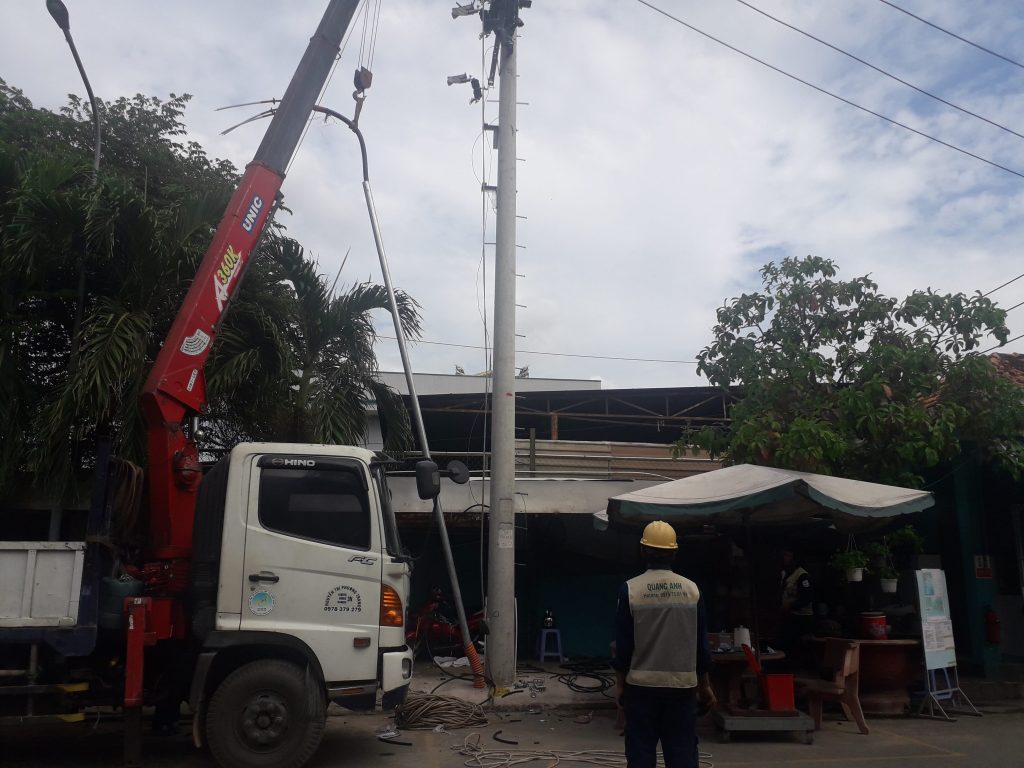
The solar energy contractor QuangAnhcons provides solutions ranging from solar energy services, design and installation of electrical systems to professional monitoring and warranty.
Comprehensive solar energy services
The solar energy contractor QuangAnhcons offers complete services for solar energy systems, from design, construction to maintenance. With extensive experience in implementing rooftop solar energy, the company commits to meeting the highest safety and efficiency standards. These solutions not only contribute to sustainable green energy development but also optimize costs for customers, ensuring the electrical systems operate durably and continuously.
Comprehensive solar energy services are a leading solution to optimize performance and cost savings for customers. This process starts with solar energy consultancy and surveys of each customer’s specific needs, from which a suitable solar system design is created.
- Consultancy and survey: From the initial stage, customers receive in-depth solar energy consultancy to analyze and determine specific energy needs.
- Supply of genuine materials: Use of high-quality equipment such as solar panels, inverters, and genuine accessories to ensure reliability.
- Optimal design: The system is technically and economically optimized to maximize electrical energy performance.
- Solar panel installation: Professional technicians carry out solar panel installation to the highest safety and technical standards.
- Operation and maintenance of solar power systems: Modern renewable energy monitoring technologies are applied to track system operations and maintain performance.
Additionally, there are three main solar power systems to meet the diverse needs of customers:
- Rooftop solar power: Installed on the roofs of residential and industrial buildings, this system helps maximize roof space utilization.
- Standalone solar power: Suitable for areas without available electrical grids, this system provides energy in remote areas.
- Grid-tied systems: Allows direct connection to the national grid, enabling surplus electricity exchange and optimization of electricity costs.
Each stage from consultancy, design, material supply, installation, to maintenance aims to improve performance and ensure the sustainable operation of the solar energy system, providing economic benefits and environmental protection.
Optimal design and installation of electrical systems
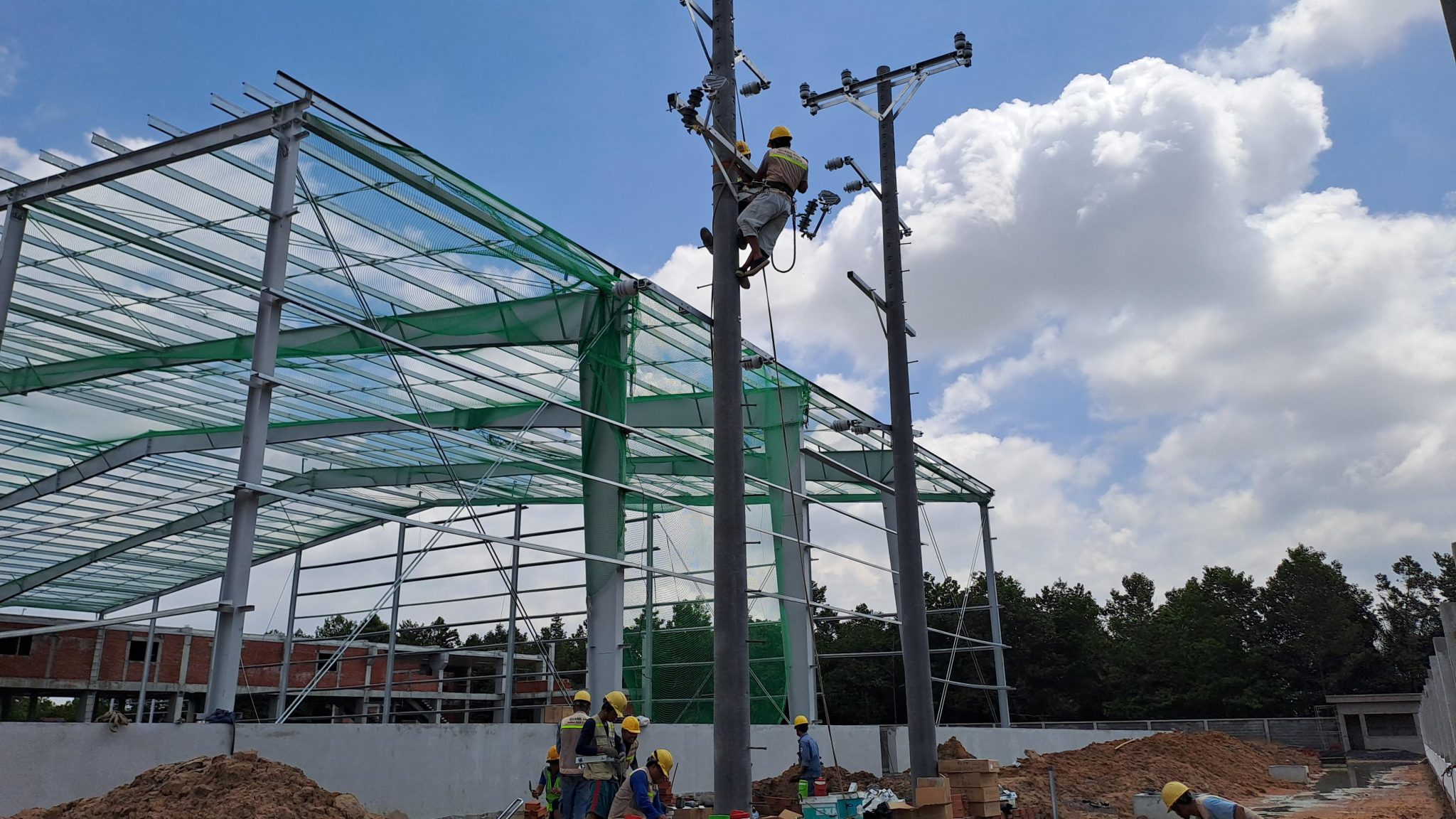
To meet the growing demand for solar energy, QuangAnhcons focuses on optimal design and installation of industrial electrical systems. This process includes technical analysis, detailed planning, and implementation of substation construction. Ensuring that all systems comply with safety regulations, operational efficiency, and align with the investor’s sustainable green energy goals.
The design and installation of optimal electrical systems is a complex process, requiring special attention to safety and efficiency. The design of electrical systems must ensure absolute safety for users and operating equipment. This requires choosing a suitable power distribution diagram, accurate load division, and selecting appropriate conductor sections and circuit breakers. By doing so, we can avoid risks such as damage, short circuits, or energy waste.
Another important aspect is the technique of load division and selection of switching devices. Incorrect loads will affect the lifespan of equipment and cause malfunctions, while oversized loads cause waste as equipment capacity is not fully utilized. Therefore, precise load division is necessary.
Home electrical design principles require reasonable placement of sockets and wiring. This includes avoiding placing outlets in dangerous places and arranging wires to avoid crossing. Protective devices and distribution boards need to be placed conveniently for easy operation and inspection.
Detailed design steps include:
- Calculating lighting and loads for each area
- Calculating and selecting wires, switching devices (circuit breakers, CBs)
- Designing lightning protection and earthing to ensure safety standards
- Statistical accounting of equipment and completing design drawings
Practical experience shows that designing with surplus capacity, outlets, and electrical lines will help meet future development needs and minimize complex repairs. Electrical lines are organized to run from the ceiling down, perpendicular to outlets, making them not only easy to repair but also safe.
Attention should be given to designing electrical paths for specific devices such as home elevators, dishwashers, water heaters, infrared heaters, ensuring diverse utilities.
For quality electrical standards, allowable voltage deviation needs to be maintained within -10% to +5% of the nominal voltage. Power usage and power factor cos φ should reach at least 0.85 to ensure electricity savings and operational efficiency. For low cos φ, it is necessary to install power factor compensation devices.
Finally, optimizing costs and operational efficiency is essential in electrical system design. Consider simplicity in operation, the ability to automate, and economic factors to optimize.
To ensure the best operation of electrical systems, all factors from design to installation must be carefully executed and strictly adhere to safety and efficiency standards.
Intelligent monitoring and system warranty
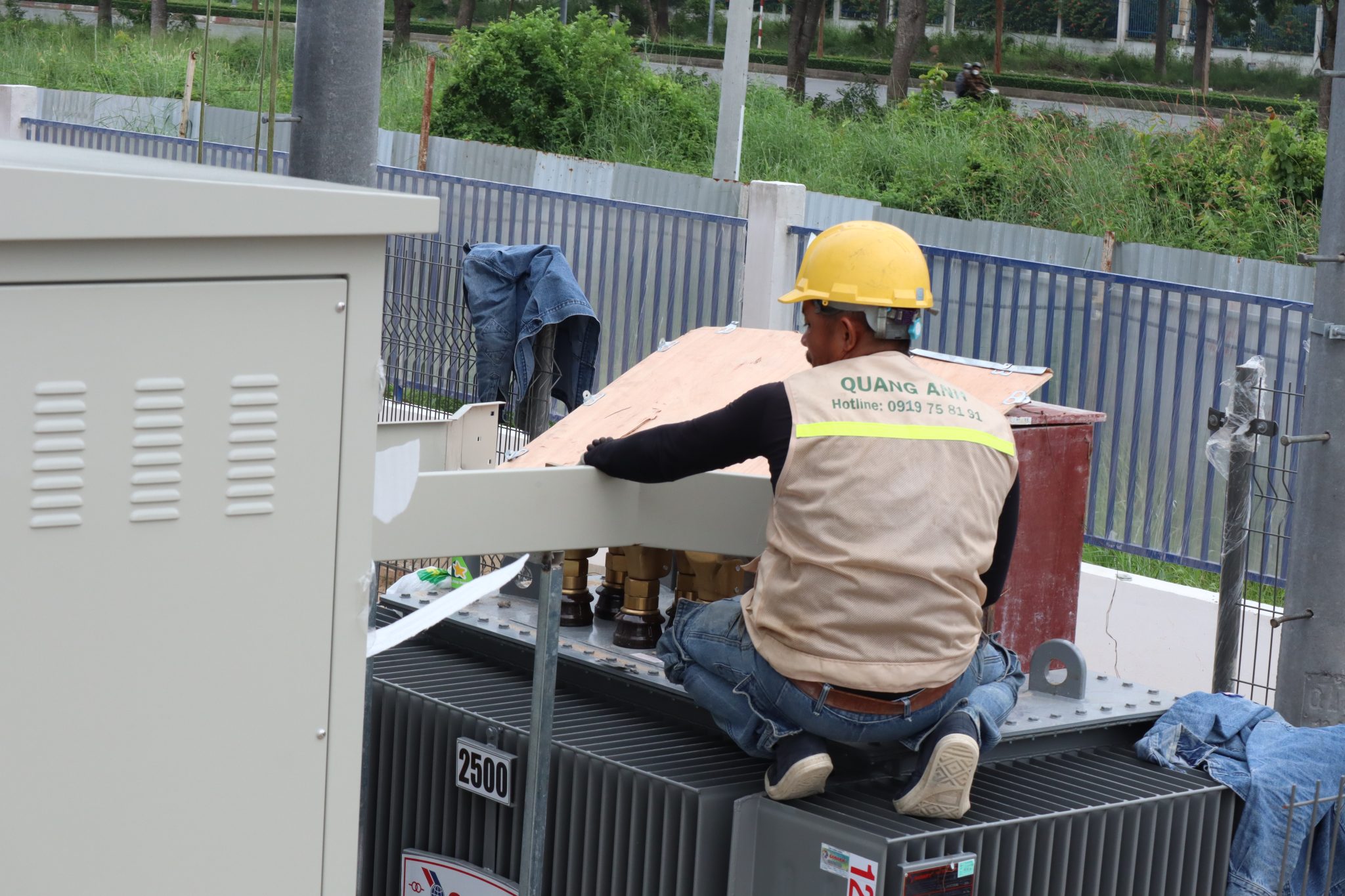
QuangAnhcons’ intelligent electrical monitoring solutions ensure that systems operate efficiently and sustainably. Advanced technology integration allows for monitoring operating conditions and early detection of technical issues. Additionally, a comprehensive warranty program helps ensure that industrial and solar power systems are always in optimal condition, supporting energy efficiency and protecting customer investment.
Intelligent monitoring and system warranty are becoming crucial in maintaining operational efficiency and longevity of technical systems. The application of system monitoring helps businesses comprehensively monitor operating status and technical issues through remote data collection. Automatic alerts and immediate analysis help promptly identify potential incidents, thereby reducing downtime and repair costs.
Moreover, intelligent warranty plays a vital role in product quality commitment. Effective warranty management promptly collects and processes requests, ensuring that products and services consistently maintain high quality. This process also includes collecting and analyzing warranty data for process improvement.
Modern maintenance software, such as CMMS maintenance software, plays a leading role in maintenance and system maintenance management. With the ability to gather detailed product information, this software supports remote monitoring and automatic alerts. It helps plan periodic maintenance, manage warranty requests, and analyze to forecast preventive maintenance needs.
Smart monitoring and system warranty solutions bring numerous benefits: from optimizing performance and extending equipment lifespan to improving customer service quality. In the end, these solutions assist businesses in analyzing, statistics, and process improvement to enhance reliability and operational efficiency.
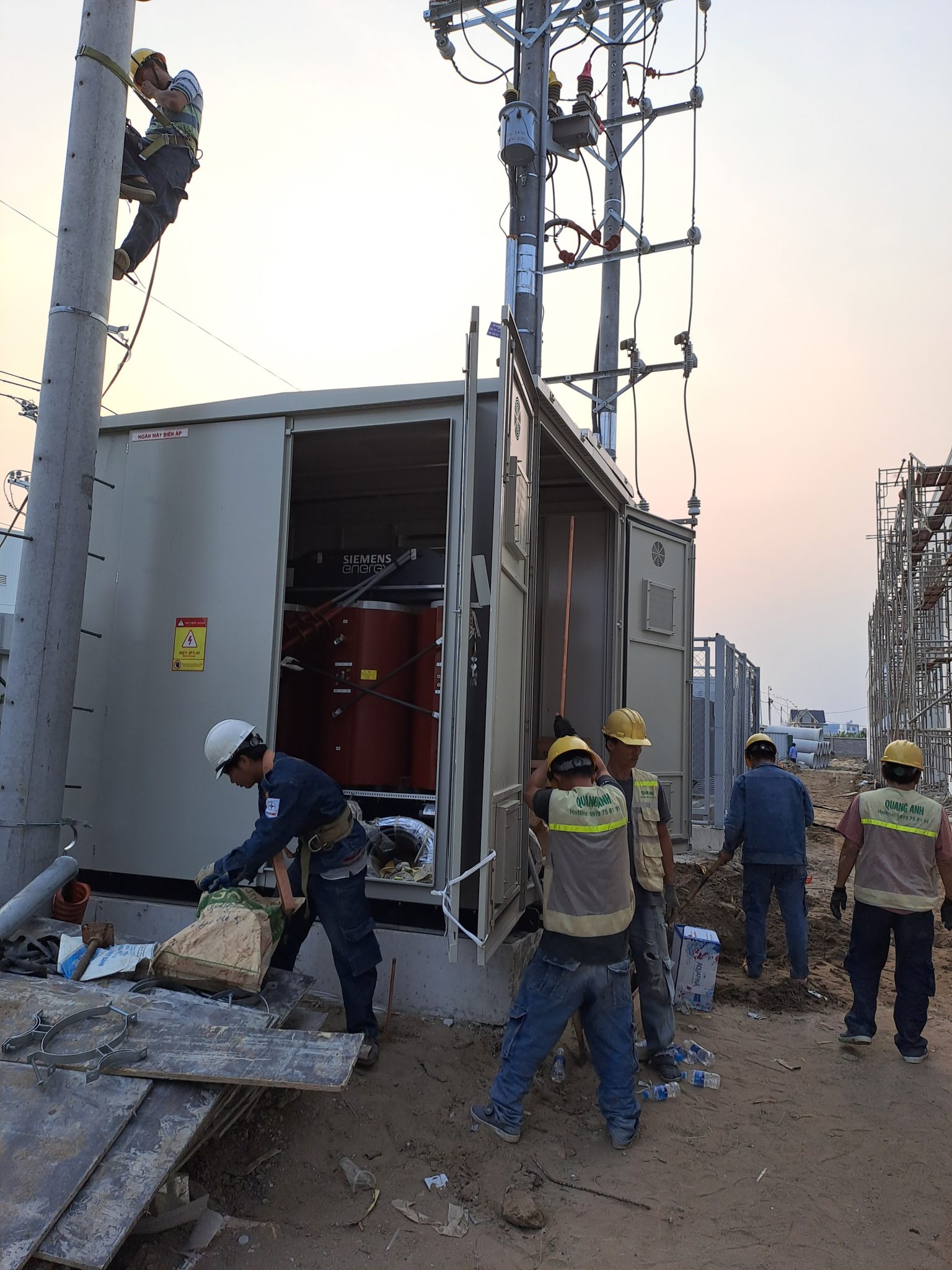
QuangAnhcons provides comprehensive solar energy solutions, from design, installation to monitoring and warranty. These solutions not only help optimize investment efficiency but also help investors shape long-term strategies with sustainable green energy.
Explore QuangAnhcons’ solar energy solutions. Contact us now via hotline: +84 9 1975 8191 for detailed advice.
QuangAnhcons offers specialized solar energy services, from consultancy, design, construction to operational monitoring, ensuring system performance and durability.
Substation budget estimate
Select the capacity, route lengths and package to view your indicative budget and electrical parameters.
Request a project quotation
Send your project details, BOQ or drawings to request a formal quotation. Fields marked * are required.
Quotation scope
Applies to one EVN-supplied substation with oil-immersed transformers at 22/0.4 kV (single-phase: 12.7/0.23 kV), with MV metering VTs/CTs supplied by EVN. The estimate includes the selected equipment, installation, earthing, transformer-to-main-breaker connections, design and connection documentation, and coordination of testing and utility acceptance.
Kiosk, integrated steel-pole and indoor substations include MV switchgear and the entered underground cable route. Other outdoor arrangements use the relevant protection configuration. The final diagram must meet the project connection requirements.
Excludes VAT, cables from the substation switchboard to the MSB/loads, live-line work, harmonic reactors, weak-ground treatment or special piling, land and special fire-protection provisions. Underground routes assume normal construction conditions and exclude road drilling and special reinstatement.
Prices are indicative investment budgets. A formal quotation follows site assessment and agreement on the configuration. Electrical selections are preliminary and require design verification before installation.
Capacity range and application conditions
The catalogue defines the enquiry range of this tool, not universal TCVN capacity limits. Single pole-mounted transformers: 15–100 kVA; three-unit banks: 3×15–3×100 kVA. Platform substations: 100–630 kVA. Steel-pole substations: 100–630 kVA; 750/800 kVA require design verification and local approval. Ground-mounted, kiosk and indoor configurations: 50–10,000 kVA. Not every configuration has a package price or the same structural design.
Reference: EVN Decision 1299/QD-EVN dated 3 November 2017, Volume 1, sections 3.3–3.4. Check the current requirements of the responsible utility before implementation. Kiosks must meet manufacturer ratings and testing requirements (IEC 62271-202); indoor and ground-mounted arrangements must meet project layout, ventilation, structural and fire-protection requirements. For multiple transformers, specify the quantity and capacity of each unit.
Developed by QuangAnhcons · © 2026 QuangAnhcons. Code licensed under GPL-2.0-or-later. Standards and manufacturer data belong to their respective owners.